Broadcom's VMware Exodus Hits Retail: Sheetz Moves 11K VMs to StorMagic Across 838 Stores
Key takeaways
- Sheetz is migrating ~11,000 virtual machines from VMware vSphere to StorMagic's SvHCI across all 838 store locations, driven by Broadcom's forced subscription model and price increases.
- Over 600 stores have already been migrated at a pace of 200 per month, with full completion expected within four months and no need to send technicians on-site.
- The move adds Sheetz to a growing list of enterprises — including Allstate, T-Mobile, and Tesco — abandoning VMware post-Broadcom acquisition, with Gartner projecting 35% of VMware workloads will migrate elsewhere by 2028.
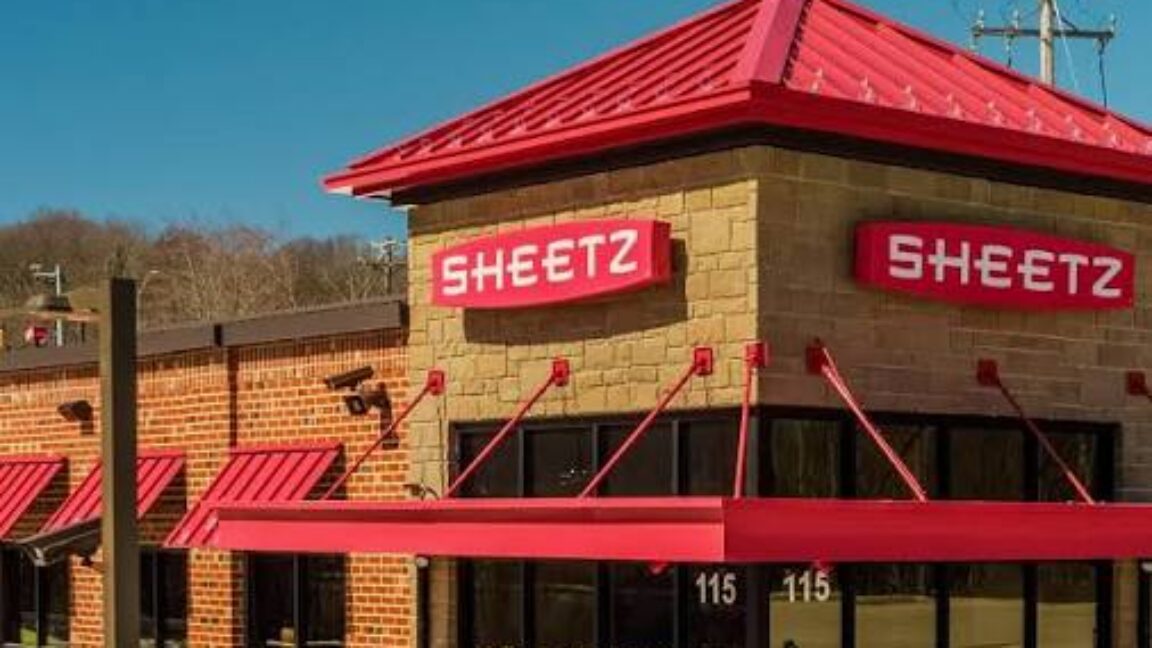
Sheetz, the Pennsylvania-based convenience store chain with 838 locations across the eastern United States, is in the middle of one of the most visible corporate departures from VMware since Broadcom's controversial acquisition reshaped the virtualization market. The company is migrating approximately 11,000 virtual machines away from VMware vSphere and onto StorMagic's SvHCI hyperconverged infrastructure platform — a transition that has already covered more than 600 stores and is progressing at a rate of roughly 200 stores per month. If that pace holds, Sheetz expects to wrap up the entire migration within four months, making it a remarkably swift execution for a project of this scale.
The decision to walk away from VMware came down to money and contractual pressure. Scott Robertson, infrastructure team manager at Sheetz, explained that Broadcom's elimination of perpetual licensing in favor of large subscription bundles, paired with mandatory five-year commitments, made long-term IT budgeting nearly impossible. 'The projected price hikes, coupled with a mandatory subscription model and a five-year commitment, simply created too much uncertainty around long-term budgeting and increased our vendor dependence,' Robertson told Ars Technica. Sheetz had relied on VMware virtualization running across two Dell R440/R450-series servers at each store location since 2019, and while the hardware is staying put, the software stack is being overhauled entirely.
StorMagic was not an unfamiliar name to Sheetz's IT team. The company had already been using StorMagic's SvSAN virtual storage area network product alongside VMware since 2019 for critical in-store applications, which gave infrastructure engineers a proven baseline of confidence in the vendor. Gary Sliver, director of platform engineering at Sheetz, noted in a statement that the initial rollout 'proved StorMagic could deliver the resilience and centralized management needed across a large, distributed retail environment.' Critically, the migration from SvSAN to SvHCI does not require on-site technicians at each store, a logistical factor Robertson described as saving a 'significant' amount of money across an 838-location footprint.
The migration has not been without its complications. Robertson acknowledged that automation and SvHCI's VM Import Utility were essential to keeping store operations running around the clock during the transition, describing the challenge as requiring 'meticulous planning and heavy automation.' The 24/7/365 nature of convenience store retail meant there was no maintenance window large enough to take systems offline in a conventional sense. Additionally, the relative maturity of SvHCI's API ecosystem presented minor extra development work, and the sheer scheduling pressure of simultaneously planning, developing, and deploying the migration across hundreds of stores demanded significant coordination from the Sheetz infrastructure team.
Sheetz is not alone in its departure. Other major enterprises including Allstate, T-Mobile, and UK grocery chain Tesco have also announced migrations away from VMware following Broadcom's acquisition. Gartner estimated in September that 35 percent of VMware workloads could migrate to alternative platforms by 2028, a figure that represents a massive market opportunity for companies like StorMagic. For StorMagic's part, the Sheetz win signals an intentional push beyond its traditional small-to-medium business roots and into the distributed enterprise segment — organizations with hundreds of edge locations that each present infrastructure challenges resembling those of standalone SMBs.
The bigger picture
The Sheetz migration is a concrete data point in what is shaping up to be a slow-motion restructuring of the enterprise virtualization market. Broadcom's acquisition strategy for VMware was always going to be a calculated risk: maximize revenue from an entrenched install base even at the cost of alienating customers who had alternatives. What's becoming clearer with each high-profile defection — Allstate, T-Mobile, Tesco, and now Sheetz — is that the pain threshold for large organizations varies far more than Broadcom may have anticipated. Retail chains and distributed enterprises with lean IT budgets at the edge are proving to be among the first to pull the trigger.
StorMagic's positioning here is worth watching carefully. The company has historically occupied a comfortable niche serving SMBs, but the Sheetz announcement is a deliberate signal to enterprise procurement teams that StorMagic is ready to compete at scale. The insight from StorMagic's SVP of global sales — that a distributed enterprise with hundreds of locations faces essentially the same per-site challenges as an SMB — is not just marketing copy; it is a genuine architectural argument that could resonate with grocery chains, fuel retailers, and financial services firms running branch networks. If StorMagic can convert even a fraction of the enterprise edge market currently held by VMware, the revenue implications are substantial.
For readers and IT decision-makers watching this space, the most important signal from the Sheetz story is not the migration itself but the speed and cost profile. The fact that Sheetz is completing this at 200 stores per month, without dispatching field technicians to each site, directly dismantles one of the most common arguments for VMware lock-in — that migration is simply too expensive and operationally disruptive to be worth it. Other organizations still in planning stages should treat this as a proof-of-concept at scale. Broadcom's counter-argument that its licensing model aligns with industry norms may be technically accurate, but it is becoming increasingly irrelevant when real-world alternatives are demonstrably working.
We decided to cover this story at LagPing because it sits at an important crossroads between enterprise technology strategy and the real-world consequences of major acquisitions — exactly the kind of story our readers in tech and IT need to understand. Broadcom's takeover of VMware has been generating noise for months, but the Sheetz migration gives us something tangible: actual numbers, actual timelines, and an actual alternative vendor succeeding at scale. That makes this far more useful to our audience than another round of industry speculation. We also think the distributed retail angle is underreported — most virtualization coverage focuses on hyperscale data centers, but the edge infrastructure challenges facing chains like Sheetz are just as real and far more widespread. The StorMagic element adds an interesting underdog dimension that we think will resonate with readers who follow competitive dynamics in enterprise software. Expect us to keep tracking the broader VMware exodus as more enterprises cross the point of no return.
As an Amazon Associate, LagPing earns from qualifying purchases. Product links are affiliate links.
You might also like

Archetype's Sci-Fi Epic Exodus Lands April 2027—Here's What Three Years of Development Brought
Sep 9

Spiel des Jahres Winner Hits Record Low on Amazon After Year of Sellouts
Sep 9

Young Founder's AI Assistant Hits $2.5B Valuation After Summer Funding Surge
Aug 27

Magic Puzzle Company's Spooky Shire Hits Amazon and Target Before Its Own Website Lists It
Aug 26