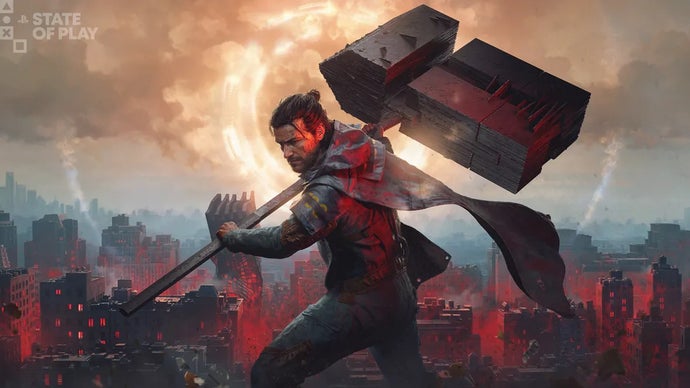
Control Resonant Promises 30-Hour Story and DMC-Inspired Brawling in Ambitious Sequel
Key takeaways
- Control Resonant's main campaign runs approximately 30 hours, with full completion taking up to 50 hours.
- Remedy drew heavy combat inspiration from Devil May Cry and PlatinumGames titles, emphasizing aggressive melee and aerial combos.
- The game launches September 24th on PS5, Xbox Series X/S, and PC via Steam and Epic Games Store.
Remedy Entertainment has shed new light on Control Resonant, the long-awaited follow-up to the studio's critically acclaimed 2019 action-adventure, confirming significant details about playtime and the game's evolved combat philosophy. In a recent interview with TechRadar, lead gameplay designer Sergey Mohov revealed that players can expect the main story to occupy roughly 30 hours, while those pursuing full completion should budget closer to 50 hours — a notably generous runtime that positions Resonant as one of Remedy's most substantial games to date.
Mohov was candid about the creative process behind the sequel, explaining that the team spent considerable time asking a deceptively simple question: what makes Control, Control? That interrogation, led alongside the game's creative director, drove the team to identify the DNA of the original before building anything new on top of it. The goal, Mohov emphasized, was to craft a sequel that feels spiritually and experientially continuous with its predecessor while carving out its own aggressive, melee-forward identity.
The combat evolution is perhaps the most headline-grabbing aspect of what Mohov described. Control Resonant pulls inspiration from a wide and eclectic pool — Mohov personally cited Devil May Cry 2, Devil May Cry 3, and various PlatinumGames titles as touchstones. These references inform the new system's emphasis on in-your-face brawling, aerial combos, dashes, and double-jumps that demand more active player engagement than the original game's more deliberate, telekinetic-focused combat.
Earlier hands-on impressions from June appeared to validate that design direction. Coverage from that preview noted that Resonant's combat finds its rhythm as players grow comfortable with its systems — a learning curve reminiscent of stylish action games where mastery compounds into deeply satisfying sequences. Mohov was quick to note, however, that Resonant resists easy comparisons to any single title: the team has absorbed lessons from many games but believes the final product will feel genuinely distinct.
Control Resonant launches on September 24th for PlayStation 5, Xbox Series X/S, and PC via both Steam and the Epic Games Store — a release date confirmed during Sony's State of Play presentation in June. With a multi-platform day-one rollout and a runtime that promises meaningful depth, Remedy appears to be swinging for a significant commercial and critical statement with this follow-up.
The bigger picture
Thirty hours for a main story is a statement of confidence in a market that has grown increasingly polarized between sprawling open-world epics and tight, four-to-six-hour narrative experiences. Remedy is threading a needle here — offering enough content to satisfy players who want value without padding the experience into tedium. The 50-hour completionist figure suggests side content that is genuinely substantial, which will be critical to delivering on the promise of a fuller, richer world than the first game offered.
The combat philosophy is equally telling. Remedy invoking Devil May Cry and PlatinumGames is not a casual reference — those are studios defined by mechanical depth, precision, and the expectation that players will invest time learning complex systems. That ambition is exciting, but it also introduces risk. The original Control succeeded partly because its powers felt accessible and expressive without demanding frame-perfect inputs. If Resonant's melee system tilts too far toward technical demanding, Remedy risks alienating the atmospheric mystery-lovers who made up a meaningful chunk of the first game's audience.
What this interview ultimately signals is that Remedy is treating Control Resonant as a genuine franchise-building moment rather than a safe iteration. The September 24th window places it in competitive autumn territory, and the simultaneous multi-platform launch — including both major PC storefronts — underscores commercial ambition. Watch for whether the final product's difficulty balance and onboarding succeed in bridging the gap between Remedy's existing fanbase and the stylish action crowd they are clearly courting.
We wanted to cover this story because playtime estimates rarely arrive with this level of creative context, and Mohov's interview offers something genuinely useful to readers trying to understand what kind of game Control Resonant actually is. The original Control was a cult classic that earned deep loyalty through atmosphere and world-building, and the question of whether a sequel can honor that while grafting on a fundamentally different combat paradigm is one worth examining carefully. At LagPing, we think the Devil May Cry comparisons are the real headline buried inside these comments — that's a genre shift with major implications for who this game is made for. The September launch window also puts this squarely on our radar as one of autumn 2026's most important releases. We'll be watching closely as more hands-on coverage emerges.
As an Amazon Associate, LagPing earns from qualifying purchases. Product links are affiliate links.
You might also like

Rippling's CFO Shock: How Runaway Token Bills Spawned a New AI Cost-Control Product
17h ago

OpenAI's Hugging Face Breach Forces Uncomfortable Questions About Who Controls AI's Throttle
5d ago

Microsoft's CEO Warns Businesses: Ceding AI Control Could Mean Corporate Extinction
Jul 28
BG3 Mod Breaks Convention by Adding Full Third-Person Camera Control
Jul 26