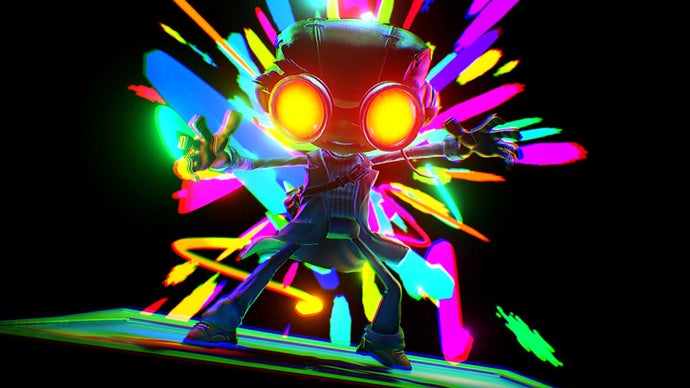
Double Fine Cuts 25% of Workforce Weeks After Breaking Free From Microsoft
Key takeaways
- Double Fine has laid off 23 employees — around 25% of its pre-split workforce of approximately 90 people.
- Studio head Tim Schafer cited the need to reach a sustainable size following the studio's return to independence from Xbox.
- Microsoft's Xbox distanced itself from the layoffs, stating that Double Fine now fully manages its own operations.
Double Fine Productions, the beloved studio behind the Psychonauts series, has announced the layoff of 23 staff members — approximately 25% of its workforce — just weeks after regaining independence from Microsoft's Xbox Game Studios. Studio head Tim Schafer confirmed the cuts in an official statement, describing the decision as painful but necessary for the studio's survival as it transitions back to operating on its own terms. The timing makes an already difficult situation feel especially stark, as these are people who stuck with the studio through its Microsoft era only to face uncertainty almost immediately after the split.
Schafer's statement was measured but candid. 'Today, Double Fine Productions let go of 23 members of our staff,' he wrote. 'As a small, tightly-knit team, these actions are not taken lightly. Only the survival of our studio would ever make us consider such a painful action. Our transition to becoming an independent company also means becoming a size that we can sustain.' He was careful to acknowledge the human cost, noting that those let go had all made meaningful contributions to both the games and the studio's culture.
Microsoft's response, delivered via an Xbox spokesperson to Kotaku, was notably hands-off. The company confirmed that Double Fine returned to independent management with its IP, back catalog, and financial runway intact, but made clear that the studio now manages its own operations entirely. In short, Xbox is stepping back and letting Double Fine chart its own course — for better or worse.
Reporter Jason Schreier clarified on Bluesky that the studio's pre-layoff headcount sat at roughly 90 people, lending precision to the 25% figure. Social media posts from affected employees suggest some of those let go had been with Double Fine for well over a decade, making the cuts particularly painful for a studio known for its tight community and creative culture.
Double Fine's departure from Xbox came as part of a broader restructuring that also saw Compulsion Games — developers of South of Midnight — go independent, while Undead Labs and Ninja Theory were reportedly acquired by as-yet-unconfirmed new owners. The layoffs underscore just how difficult the road to true independence can be, even when a studio walks away with its IP and some financial cushion. For a team of Double Fine's size and ambition, rightsizing after years under a corporate umbrella is an unavoidable — if brutal — first step.
The bigger picture
The broader context here matters enormously. Double Fine's situation is a microcosm of what happens when a large publisher restructures and smaller studios are left to figure out viability on their own. Microsoft's Xbox division has been shedding studios and projects at a remarkable clip, and while framing these departures as 'independence' sounds optimistic, the reality is that studios accustomed to AAA-level resourcing suddenly have to operate like scrappy independents — often without the infrastructure or financial reserves to do so painlessly. Twenty-five percent workforce cuts on day one of independence is a sobering indicator of just how much Microsoft's overhead was propping up the studio's headcount.
For the wider industry, this raises uncomfortable questions about what 'independence' actually means in practice. Receiving your IP and a runway is meaningful, but it doesn't automatically generate revenue. Double Fine will need to ship something commercially viable — and soon — to justify its new operational model. The studio has historically leaned into mid-sized, critically acclaimed projects rather than blockbuster hits, which is a perfectly legitimate creative path but a challenging financial one in today's market. Investors and publishing partners will be watching closely to see what the studio announces as its first post-Microsoft project.
What readers should watch is whether other Xbox-adjacent studios in similar positions face comparable contractions. Compulsion Games also went indie following South of Midnight, a game that received decent reviews but was never a monster seller. If studios of this size can't sustain full headcounts without Microsoft money flowing in, the indie exodus from Xbox could result in a wave of talent displacement across the industry. Double Fine's ability to stabilize and announce a compelling next project will be a bellwether for how this generation of newly independent studios fares.
We felt this story demanded immediate coverage because it sits at the intersection of two of the most important trends we've been tracking at LagPing — the ongoing Xbox restructuring and the ripple effects on the people who actually make games. Double Fine is not just any studio; it's a culturally significant creative house with a decades-long legacy, and Tim Schafer's voice carries genuine weight in the industry. When a studio of this pedigree has to cut a quarter of its team on the way out the door of a major publisher, it tells us something real about what 'independence' looks like in 2026. We also think it's important to humanize these numbers — 23 people isn't an abstract figure, and the reports of long-tenured employees among those affected deserve acknowledgment. We'll continue to follow Double Fine's next chapter closely and report on any project announcements as they come.
As an Amazon Associate, LagPing earns from qualifying purchases. Product links are affiliate links.
You might also like

That's No Moon Cuts Artists Amid Crossfire Development Push
1d ago

Screen Burn's Foggy Scottish Islands and Analog Dread Redefine Silent Hill's Future
Jul 31

Qualcomm Chips to Cost Manufacturers More from September as Double-Digit Hikes Loom
Jul 30
Car Park Capital Teams With MicroProse to Double Down on Its Anti-Green City Destruction Fantasy
Jul 28