
Fired Writer vs. Studio CEO: Who's Telling the Truth About AI Replacing Human Talent?
Key takeaways
- Writer Stella Sacco claims Saber replaced her with ChatGPT midway through Rideshare Stimulator's development.
- CEO Matthew Karch denies any writers were replaced by AI on the project.
- Sacco also alleges all passenger voices in the game are AI-generated, with no Steam disclosure.
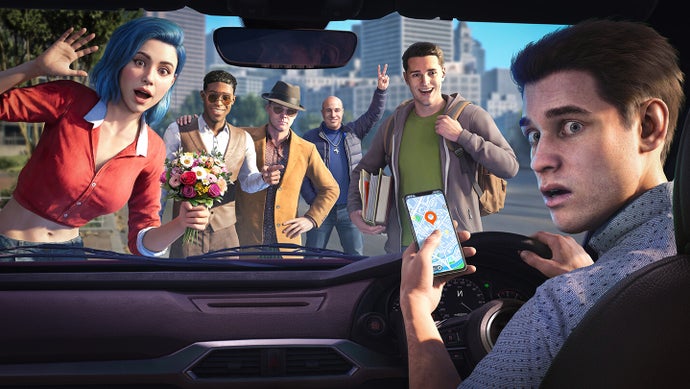
A public dispute between Saber Interactive's CEO and a former lead writer is drawing attention to the murky territory of AI use in game development. Stella Sacco, who says she served as lead writer on Rideshare Stimulator — a driving simulation game developed by Unigine and announced last month — posted on Bluesky that Saber replaced her with ChatGPT midway through the project. She also alleged that all passenger voice performances in the game were AI-generated.
Saber Interactive CEO Matthew Karch pushed back directly, stating that neither Saber nor Unigine replaced any writers with AI on the title. That categorical denial puts the two accounts in direct contradiction, with no neutral third party yet weighing in to clarify what actually happened during the game's development cycle. Sacco's post suggested there may have been a creative pivot at some point in production, noting that either the studio changed direction or it is failing to disclose AI involvement on the game's Steam page.
Rideshare Stimulator is described by Saber as an immersive driving simulation experience that puts players behind the wheel of a rideshare vehicle. The game was announced only last month, meaning it is still fresh in the public eye — and this controversy arrives before most players have even had a chance to evaluate its writing or voice performances firsthand.
The stakes of this dispute extend beyond one game. Steam and other storefronts have faced growing pressure to require disclosure when AI-generated content appears in games, and several developers have already faced consumer backlash over undisclosed AI art or audio. If Sacco's account is accurate, it would represent exactly the kind of mid-production substitution that critics of AI in creative industries warn about — a human creative replaced quietly, with no public acknowledgment.
As of now, neither side has provided documentation to support their account, and Saber has not indicated whether an internal review or any formal clarification is forthcoming. Sacco has not deleted her posts, suggesting she stands behind her version of events. The story remains unresolved, and the gaming community is watching closely to see whether any evidence surfaces that settles the conflict.
The bigger picture
This dispute is unlikely to fade quickly, because it touches on one of the most contested questions in the games industry right now: are studios quietly replacing human creative workers with AI tools and simply not telling anyone? Saber Interactive is not a small outfit — it has worked on major licensed titles and has the resources to be transparent about its production pipeline. The fact that CEO Matthew Karch issued a denial rather than a detailed explanation leaves room for skepticism, even if the denial itself turns out to be accurate.
For platforms like Steam and Valve, this is a pressure point. Valve has required developers to disclose AI-generated content on Steam listings, but enforcement and definitions remain inconsistent. If Rideshare Stimulator does contain AI-generated voices and writing without clear disclosure, that could put it in violation of existing platform guidelines — and that is a concrete consequence that goes beyond public relations damage. Rival studios that have been transparent about their AI policies may find this moment useful in differentiating themselves.
For creators and writers in the games industry, Sacco's willingness to speak publicly is notable. Many contractors and freelancers in similar situations stay quiet out of fear of damaging future employment prospects. Her post signals a growing willingness among creative workers to name studios and describe specific circumstances when they believe they have been displaced by AI. Readers should watch whether Saber provides any production documentation, whether Steam takes any action on the listing, and whether other workers on the project corroborate or contradict either account.
We decided to cover this story because it is not just a he-said-she-said spat — it sits at the intersection of AI labor displacement, studio transparency, and platform accountability, three issues we have been tracking closely at LagPing. When a lead writer publicly names a studio and describes being replaced by ChatGPT mid-development, that is a specific, serious allegation that deserves scrutiny rather than a quick scroll past. The fact that the studio's CEO responded directly suggests both sides understand what is at stake reputationally. We want our readers — many of whom work in or around the games industry — to have the full picture of what is alleged and what has been denied, without us inflating either claim into something more than the facts currently support. This is also a reminder that AI disclosure is not just an abstract policy debate; it plays out in real disputes between real people. We will update this story if new evidence emerges.
As an Amazon Associate, LagPing earns from qualifying purchases. Product links are affiliate links.
You might also like

Straley's AAA Critique Backfires: Ex-Naughty Dog Director Apologizes to Santa Monica Studio
3d ago
Saber Interactive Doubles Down After AI Writer Backlash, Refuses Strategy Shift
Sep 7

Tim Schafer Fights to Save Double Fine After Xbox Cuts Studio Loose
Sep 5

Hollywood's Licensing Gamble: Why Studios Hold More Leverage Than Google Admits
Sep 2