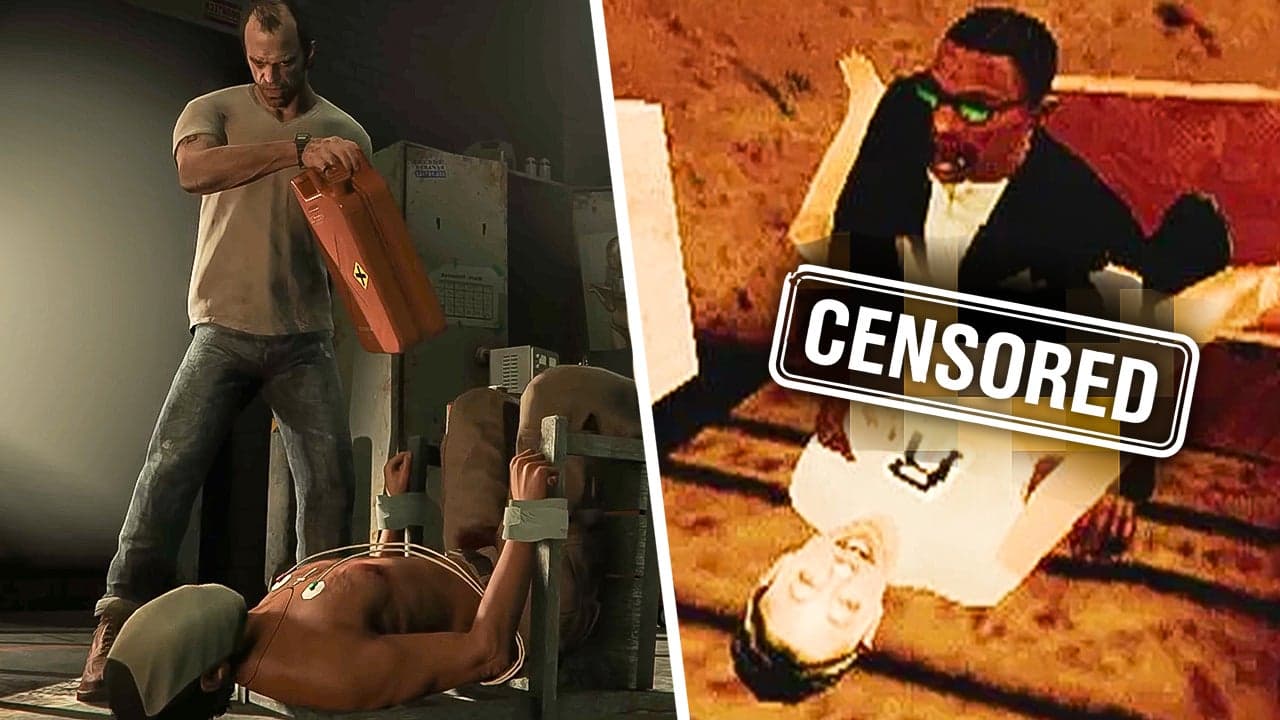
From Hot Coffee to Jack Thompson: How GTA Survived 30 Years of Outrage
Key takeaways
- Rockstar's original publisher deliberately engineered GTA's first controversy using politicians and tabloids as marketing tools, helping drive over three million sales by 1999.
- Attorney Jack Thompson spent more than a decade filing lawsuits against Rockstar, Take-Two, retailers, and Sony, but courts consistently dismissed his cases as legally unfounded.
- The Hot Coffee scandal — triggered when modder Patrick Wildenborg unlocked disabled sexual content in San Andreas — sparked a congressional resolution and a formal ESRB investigation in 2005.
Few entertainment franchises have absorbed as much public fury as Grand Theft Auto, and fewer still have turned that fury into a commercial advantage. Since the original top-down driving game launched in 1997 from Scottish developer DMA Design, the series has been a lightning rod for politicians, lawyers, parents groups, and tabloid reporters eager to pin society's ills on a video game. What's remarkable is not that the controversy existed, but how consistently it backfired on those who tried to use it to bury the franchise.
The very first GTA controversy was, in large part, a calculated stunt. Publisher BMG — experienced in generating buzz for transgressive acts like the Sex Pistols — hired a publicist to leak lurid details to UK tabloids and quietly tipped off pearl-clutching members of Parliament. When Lord Campbell of Croy stood in the House of Lords and warned the public about this dangerous criminal simulator, BMG turned the audio into a radio campaign. The outrage was real, but the machinery behind it was not. Grand Theft Auto sold over three million copies by 1999 and was banned in Brazil, proving that the studio had learned an enduring lesson: controversy, manufactured or organic, converts into cash.
The franchise's most relentless enemy arrived with GTA 3 in the early 2000s. Jack Thompson, a Florida-based conservative attorney, made Rockstar his personal white whale. He appeared constantly on cable news, filed lawsuits against Take-Two Interactive, major retail chains, and even Sony for manufacturing the hardware GTA ran on. His most prominent case involved Devin Moore, an Alabama man convicted of killing three police officers in 2005, whom Thompson alleged was driven to violence by his obsession with GTA. The BBC later made a television film about the case. Rockstar dismissed the claims as fabricated nonsense, and courts consistently agreed — but Thompson kept finding new platforms regardless.
If Thompson was the franchise's most dogged critic, the Hot Coffee scandal was its most genuinely complicated moment. During development of GTA: San Andreas, Rockstar built a fully realized dating minigame with explicit sexual content. Fearing an Adults Only rating — which would have locked the game out of up to 80% of US retailers — the studio disabled the content rather than removing it from the code entirely. When the PC version released in 2005, Dutch modder Patrick Wildenborg discovered the dormant files with a simple hex edit and published the restoration mod on June 7, 2005, calling it Hot Coffee. Retailers including Walmart, Target, and Best Buy immediately pulled the game, and the ESRB launched a formal investigation into its own rating process.
The fallout reached all the way to Capitol Hill. Jack Thompson, never one to waste a crisis, briefed then-Senator Hillary Clinton for a press conference that led to a congressional resolution demanding an FTC investigation into the matter. Rockstar recalled existing copies and issued patched versions, while debate raged about whether the modding community had created the content or simply unlocked what Rockstar had left behind. Wildenborg, in an act of good faith, took the files down voluntarily. The entire episode illustrated how poorly mainstream audiences understood game development, and how eagerly both sides exploited that confusion. Through it all, the Grand Theft Auto series endured, emerging from every controversy with its cultural standing — and its sales figures — largely intact.
The bigger picture
What the long arc of GTA controversies actually reveals is the franchise functioning as a kind of cultural Rorschach test. Each generation of critics projected their deepest anxieties onto Rockstar's sandbox — whether that was 1990s tabloid Britain's fear of youth delinquency, post-Columbine America's desperate search for explanations, or the 2000s political class's discomfort with digital media it couldn't control. Decades of peer-reviewed research have consistently failed to establish a causal link between violent video games and real-world antisocial behavior, and yet the argument keeps resurfacing because it offers a clean, simple villain in place of genuinely difficult social questions.
The Jack Thompson chapter is particularly instructive for understanding the gaming industry's relationship with mainstream media. Thompson was not a serious legal threat — courts dismissed his cases routinely — but he was an extremely effective media figure at a time when cable news needed a telegenic crusader and gaming lacked sympathetic spokespeople. The industry's eventual response, which included stronger self-regulation and more sophisticated public communications, was shaped in part by how badly the Hot Coffee crisis played out in front of audiences who had no framework for understanding modding or disabled code. That gap in public understanding was a genuine vulnerability, and it took years to close.
Looking forward, as GTA 6 approaches with an even larger cultural footprint than any previous entry, Rockstar and Take-Two should expect the cycle to repeat. The political and media landscape has changed dramatically, but the appetite for moral panic has not. New attack vectors — AI-generated content, online multiplayer behavior, monetization practices — will likely replace the old arguments about violence and sex. What the history suggests is that controversy alone cannot stop a franchise this large. What it can do is shape regulation, retail policy, and public perception in ways that matter at the margins. That is worth watching carefully.
We decided to dig into GTA's controversy history right now because GTA 6 is arguably the most anticipated game release in a decade, and we think it's worth understanding what Rockstar is actually walking back into. The franchise has never launched in a cultural vacuum, and it won't this time either. At LagPing, we care about covering games not just as products but as cultural objects with real histories, and GTA's history is one of the richest and messiest in the medium. We also think the Hot Coffee story in particular is genuinely underappreciated by younger readers who didn't live through it — the idea that a hidden minigame reached the floor of Congress sounds almost absurd today, but it shaped how the industry regulated itself for years afterward. Understanding where Rockstar has been helps us all make better sense of where it's headed.
As an Amazon Associate, LagPing earns from qualifying purchases. Product links are affiliate links.
You might also like

Pirate Remaster Sails Surprisingly Well on Steam Machine, Matching Desktop GPU Performance
Rock Paper Shotgun

Palworld Hits 1.0 Friday With 40M Players — And Its Price Isn't Budging
Eurogamer

Bithell Games Returns With Dracula-Ruled Britain in Tactical Vampire Sim Vampirium: 1997
Eurogamer

Minecraft Finally Lets Players Sit Down After Nearly Two Decades of Standing Around
Eurogamer