GTA Creators Weigh In on Disc vs. Digital War Sparked by GTA 6 Decision
Key takeaways
- Dan Houser and Lazlow Jones commented on the physical vs. digital debate during an IGN interview at SDCC, with Houser saying companies should provide what consumers demand.
- The controversy stems from GTA 6's disc-free announcement and Sony's plan to stop producing physical game discs after January 2028.
- Industry figures including Sega's president and Hideo Kojima have also spoken out, reflecting widespread concern across the games industry.
The debate over physical versus digital game ownership has been burning hotter than ever in 2026, and now two of the most recognizable names behind the Grand Theft Auto franchise have entered the conversation. Dan Houser, co-founder of Rockstar Games, and longtime Rockstar writer Lazlow Jones — both now working at their new venture Absurd Ventures — weighed in on the topic during an interview with IGN at San Diego Comic-Con. The pair were primarily on hand to discuss their American Caper comic series, but the physical games debate was too loud to ignore. Their remarks add notable weight to a discussion that has engulfed the games industry for months.
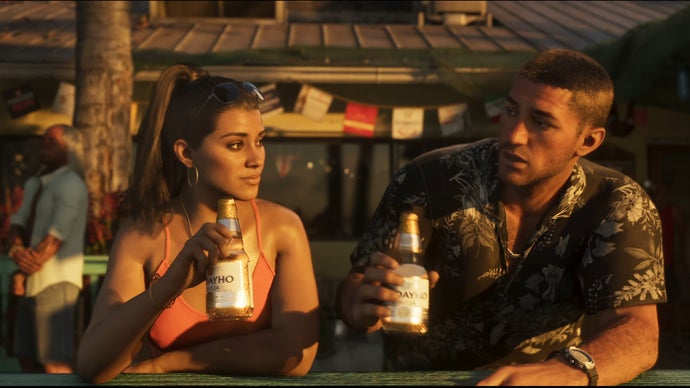
The controversy traces back directly to Rockstar's announcement that Grand Theft Auto 6 would not ship with a physical disc — a decision that sent shockwaves through a community already anxious about game preservation and consumer rights. The situation intensified when Sony followed up with its own bombshell: the company revealed it would cease producing physical discs for games entirely after January 2028. Together, these announcements crystallized fears that the industry's long-predicted all-digital future was arriving faster than anyone had anticipated, prompting responses from developers, publishers, and players worldwide.
Houser's take was measured but telling. 'I don't know that I care, but if people want that, companies should provide it,' he told IGN, framing the issue as one of consumer demand rather than personal preference. He did acknowledge a real upside to digital releases, noting that the ability to patch and improve games post-launch has meaningfully elevated overall software quality — a perspective that resonates given how complex modern game development has become. Lazlow offered a more nostalgic lens, describing the joy of picking up a physical copy and slipping a disc into a console, while simultaneously praising the convenience of downloading titles to a Steam Deck before a long flight.
Perhaps the most revealing moment came when Lazlow connected the physical-versus-digital debate to their current work producing comic books. Making something tangible, he explained, is a creatively distinct and deeply satisfying process — a sentiment Houser echoed by expressing genuine love for physical media in general. The irony is not lost that two figures who helped steer one of gaming's most iconic franchises into an era of massive digital distribution now find personal fulfillment in creating physical printed goods. It underscores the emotional complexity that surrounds this debate for creators and consumers alike.
Houser and Lazlow are far from the only industry voices speaking out. Sega's president Shuji Utsumi has publicly reaffirmed his company's commitment to physical releases, signaling that not every major publisher is racing toward an all-digital model. Meanwhile, acclaimed director Hideo Kojima — the mind behind Metal Gear Solid and Death Stranding — openly expressed sadness at Sony's decision to wind down disc production. With industry heavyweights lining up on different sides of the argument, and consumers increasingly vocal about ownership rights and game preservation, this debate shows no signs of cooling down anytime soon.
The bigger picture
What makes the Houser and Lazlow comments particularly interesting is not their content, but their source. These are two men who spent decades at the helm of one of the most commercially dominant game studios in history, a company whose digital sales have generated billions. For Houser to frame the issue as 'companies should provide what people want' rather than advocating strongly for either format signals a pragmatic, market-driven worldview — but it also sidesteps the harder question of whether the industry is listening to what consumers actually want, or simply making decisions based on margin optimization.
The competitive implications here are significant. Sony's 2028 disc phase-out, combined with GTA 6 going disc-free, could set a precedent that smaller and mid-tier publishers feel pressure to follow. If the two largest gravitational pulls in console gaming — PlayStation hardware and the GTA franchise — are signaling a digital-only future, the companies still investing in physical retail supply chains face an increasingly difficult business case. Sega's public support for physical media may be genuine, but it also looks like smart differentiation in a market where goodwill from physical-game collectors is still commercially valuable.
For readers, the bigger question to watch is whether consumer resistance actually changes corporate behavior, or whether these statements from industry figures are simply sympathetic noise while the roadmap toward all-digital continues unimpeded. Game preservation advocates, collectors, and those in regions with unreliable internet infrastructure have the most to lose. The next major signal will be how GTA 6's launch reception plays out commercially — if disc-free causes any measurable consumer pushback, publishers will take note. If it doesn't, expect digital-only announcements to accelerate rapidly across the industry.
We chose to cover this story because it sits at the intersection of two conversations we care deeply about here at LagPing: the future of how games are distributed, and the voices of the people who actually built the medium. Dan Houser and Lazlow are not random commentators — these are architects of some of the most influential games ever made, and their perspective carries genuine cultural weight. The physical-versus-digital debate isn't just a format war; it's a conversation about ownership, access, preservation, and what it means to truly own a piece of entertainment. We think our readers deserve to hear from the figures shaping these decisions, and to understand the broader industry momentum behind what might feel like individual announcements. This story is developing quickly, and we'll keep tracking it as Sony's 2028 deadline and GTA 6's launch approach.
As an Amazon Associate, LagPing earns from qualifying purchases. Product links are affiliate links.
You might also like

Google Brain Founders Depart to Build Discovery Loop, an AI-Powered Scientific Research Engine
2d ago

EU's AI Act Transparency Rules Take Force, Mandating Chatbot Disclosures and Deepfake Labels
4d ago
Sony's August PS Plus Lineup Delivers Horror Gem Signalis and Big Walk From Untitled Goose Creators
Jul 29

Pop Star Takes Anonymous Thieves to Court Over Decade-Long Digital Theft Campaign
Jul 29