
Microsoft's CEO Warns Businesses: Ceding AI Control Could Mean Corporate Extinction
Key takeaways
- Nadella argues companies that fully depend on third-party AI labs risk losing strategic autonomy and long-term viability.
- He recommends enterprises retain their own AI metadata, use open-weight models, and separate coding harnesses from model providers.
- The warning has clear commercial benefits for Microsoft's Azure cloud business, but reflects a broadly recognized risk of AI vendor lock-in.
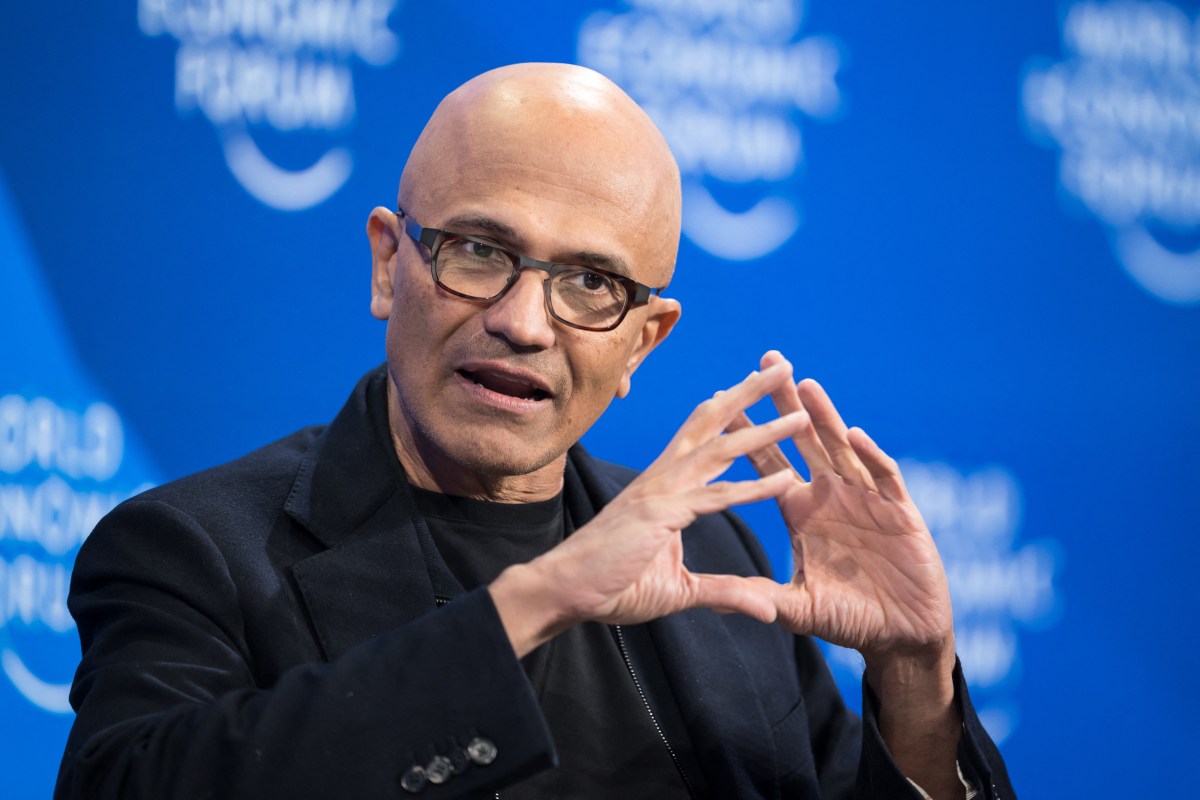
Microsoft CEO Satya Nadella used a Sunday appearance on CNN's 'Fareed Zakaria GPS' to sharpen a stark message he had begun delivering earlier this month: enterprises that hand over their data, prompts, and workflows wholesale to proprietary AI labs are gambling with their long-term survival. It was a notable escalation, moving beyond general caution into something approaching an existential warning for the business world. Nadella's core argument is that companies unable to retain control of their AI interactions will eventually find themselves unable to think independently of the providers they've grown dependent on.
At the technical heart of Nadella's argument is the concept of model weights and metadata ownership. He called for a system where every interaction a company has with an AI model generates metadata that the company itself keeps — data that could later be used to fine-tune proprietary or open-weight models. Without that retained knowledge, Nadella argued, a firm has effectively 'outsourced its thinking,' leaving it vulnerable in ways that go beyond simple vendor lock-in. He specifically warned against relying on AI labs' built-in coding harnesses, such as Anthropic's Claude Code or OpenAI's ChatGPT Codex, advocating instead for separating the harness, context, and memory layers entirely from the underlying model.
The warning carries a particular edge given Microsoft's own financial entanglements. The company holds significant investment stakes in both OpenAI and Anthropic — the very labs whose deep integration Nadella is cautioning against. Critics might reasonably note that Microsoft's Azure cloud platform stands to benefit directly from enterprises adopting the kind of multi-model infrastructure and AI gateway architecture Nadella is recommending. The self-serving dimension of the advice is hard to ignore, yet the underlying risk he describes is real and increasingly discussed in enterprise technology circles.
Nadella's concern echoes a fear that has unsettled the startup ecosystem for years. In May, when OpenAI CEO Sam Altman offered AI credits to every Y Combinator cohort startup, prominent seed investor Jason Calacanis publicly warned founders that accepting the offer could expose their ideas to a company with both the resources and the incentive to clone and undercut them. That 'platform playbook' risk — where infrastructure providers study their customers and then compete with them — is precisely what Nadella is now translating into a warning aimed at larger enterprises deploying AI agents with deep access to internal systems.
Notably, Nadella drew a clear boundary around who his warning applies to. When pressed by Zakaria about how individual consumers should protect themselves, the Microsoft CEO took a markedly different tone, suggesting that personal data sharing is simply the accepted trade-off for free services — much as it has been in the advertising economy. The protective advice, it seems, is reserved for corporations with the resources to act on it, leaving everyday users to navigate the data-for-service bargain on their own.
The bigger picture
Nadella's warnings, however self-interested, reflect a structural reality that enterprises are slowly waking up to. The AI model market is still in a phase where providers are aggressively subsidizing adoption, offering cheap or free access to lock in usage patterns and proprietary data flows. But history in tech — from mobile platforms to cloud computing to app stores — consistently shows that once a provider has sufficient insight into how customers use a platform, the incentives to compete with those customers grow substantially. The AI era is unlikely to be different, and companies that have embedded a single provider's tools deeply into their workflows may find switching costs prohibitively high by the time competitive threats materialize.
The multi-model future Nadella is advocating for also has real competitive implications for the AI lab landscape itself. If enterprises broadly adopt AI gateway infrastructure and open-weight models alongside proprietary ones, the pricing power of the major labs diminishes considerably. OpenAI and Anthropic have both been burning through enormous capital on the assumption that enterprise lock-in will eventually yield sustainable, high-margin revenue. A world where enterprises treat AI models as interchangeable commodities — plugged into neutral orchestration layers — fundamentally disrupts that business model. Nadella knows this, and Microsoft's positioning as the orchestration layer rather than the model provider is a calculated long-term bet.
For readers watching this space, the key signal to track is enterprise procurement behavior over the next twelve to eighteen months. If large organizations begin investing in AI gateway infrastructure, open-weight model fine-tuning programs, and vendor-agnostic coding agent frameworks, it will validate Nadella's thesis and put real pressure on AI lab valuations. Watch also for how OpenAI and Anthropic respond — whether through aggressive enterprise contract terms, enhanced data ownership assurances, or accelerated moves into competing cloud and infrastructure products. The battle for enterprise AI architecture is just beginning, and the stakes extend well beyond any single company's survival.
We're covering this story at LagPing because the intersection of AI dependency, enterprise risk, and platform power dynamics is one of the most consequential conversations happening in tech right now — and it's one we think deserves sharper scrutiny than it's getting. Nadella's comments may carry an obvious commercial motive, but the underlying argument about data sovereignty and competitive vulnerability is substantive and timely. We've watched similar dynamics play out with mobile platforms and cloud providers over the past decade, and the AI version of this story is moving faster and with higher stakes. What makes this moment particularly interesting is the tension between Nadella's investor relationships with OpenAI and Anthropic and his public warnings about over-reliance on exactly those companies. We think that tension is worth sitting with, rather than dismissing the advice entirely. As AI agents gain deeper access to enterprise systems, the questions Nadella is raising will only become more urgent — and we want our readers thinking about them now.
As an Amazon Associate, LagPing earns from qualifying purchases. Product links are affiliate links.
You might also like

Stripe's $7B+ OpenRouter Bet Could Reshape How Businesses Access AI Models
Aug 17

Harvard Historian Warns Tech Corporations Are Quietly Dismantling Democratic Governance
Aug 10
Satya Nadella Warns Enterprises: Trusting OpenAI or Anthropic Alone Could Cost You Everything
Jul 30

As AI Wealth Surges Past Gilded Age Levels, One Top VC Warns of a Coming Reckoning
Jul 18