Minesweeper, Blob Physics, and Big Walk's Community Magic: The Games Keeping Eurogamer Hooked
Key takeaways
- Eurogamer's Big Walk community sessions are growing, with a third Discord event planned for August 25.
- A Bluesky debate about 'games that play themselves' is prompting fresh critical thinking around titles like Vampire Survivors.
- A data outage pushed one contributor back to Minesweeper, sparking genuine appreciation for its offline puzzle design.
Eurogamer's editorial team has once again shared their weekly gaming rotation, and the selection says a lot about the current moment in games — spanning a 1990s Windows classic, a physics-driven puzzle toy, and a co-op walking sim that seems to be fostering genuine human connection. The roundup was published August 22, 2026, and written by associate editor Robert Purchese alongside contributors Mat J and Connor. The mix of titles reflects both the breadth of gaming tastes among the team and a broader conversation happening online about what it even means to 'play' a game.
One thread running through the piece is a philosophical debate sparked on Bluesky about games that largely play themselves. The discussion, which originated from a post linked to the games criticism outlet Jank, zeroes in on titles like Vampire Survivors — where the core loop involves repositioning your character and selecting upgrades while the action largely unfolds automatically. Critic Chris Franklin's perspective is cited as a reference point: that meaningful player interaction has historically been the dividing line between passive and active experiences, and extending that critique to mechanically shallow action games is a relatively new development. The piece leans into that argument playfully, pointing out that almost any game — Tetris included — can be reduced to absurdity when described reductively enough.
On the lighter end, contributor Connor found himself back on Minesweeper after losing mobile data access for two days. Rather than lamenting the experience, the piece treats it as a reminder of the game's quiet brilliance — the satisfaction of pattern recognition clicking into place, a large safe area opening up from a single click. It's a small but genuine love letter to a game most people stopped thinking about decades ago.
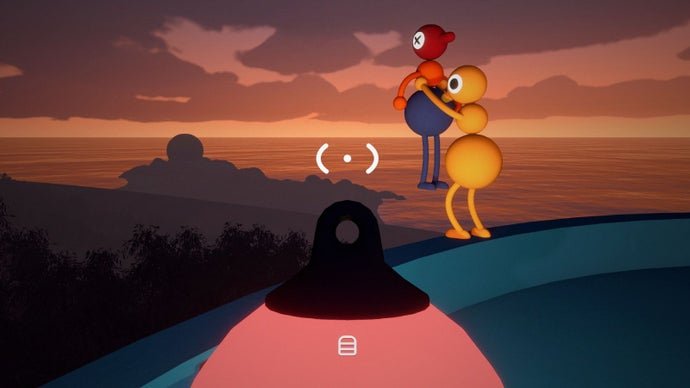
The week's real emotional core is Big Walk, a co-op exploration game set on a dense island. Now into its second consecutive week of staff-and-reader group sessions, the Eurogamer team is building what looks increasingly like a standing weekly event through the publication's Discord server. Groups of roughly four players explored puzzles, stacked themselves into human towers on fold-out chairs, and accidentally found a megaphone. One puzzle, described second-hand by Purchese, reportedly involved no mechanics at all — just players sitting together until they naturally started talking about their own lives.
A third Big Walk session was scheduled for Tuesday, August 25, open to anyone in the Eurogamer Discord. Purchese also mentioned dipping into The Lord of the Rings: The War in the North and running sessions of Hades 2 on the side. The overall picture is of a team finding meaning in very different kinds of play — from algorithmically minimal to deeply social — and that range is arguably the more interesting story underneath the individual game picks.
The bigger picture
The Bluesky debate about self-playing games is worth taking seriously, because it exposes a tension the industry hasn't fully resolved. Vampire Survivors became a phenomenon largely because it removed friction from the action roguelite formula — but if the player's primary function is to aim and loot, the critical language we use for 'passive' narrative games arguably applies. Developers working in the auto-battler and idle game space have been quietly building enormous audiences on exactly this kind of low-agency loop, and mainstream game criticism has mostly given them a pass. That's starting to change, and publications that engage with it honestly will help shape how the next generation of game designers thinks about intentionality.
The Big Walk phenomenon is quietly interesting from a competitive angle. Sony, Microsoft, and Nintendo all invest heavily in social features — party systems, voice chat infrastructure, cross-game friend lists — but the genuine social bonding described in the Eurogamer piece came from a small independent title running a Discord server, not a platform feature. It's a reminder that community architecture matters more than technical infrastructure. If Big Walk keeps growing its player base through word-of-mouth events like this, it becomes a case study for indie developers looking to build retention without a marketing budget.
Minesweeper appearing in a 2026 gaming diary is worth a raised eyebrow — not as a joke, but as a signal. The conditions that pushed Connor back to it (no mobile data) are increasingly rare, and yet the experience clearly delivered. There's a growing appetite, visible across game design trends, for constraint-based play that strips away online dependency. Offline-first design is becoming a subtle differentiator, especially as mobile infrastructure remains patchy in large parts of the world. Publishers dismissing classic game design as nostalgia bait may be missing a real user need.
We wanted to flag this piece because it's doing something that gaming coverage doesn't always make room for — it's sitting with the texture of actually playing games, not just evaluating them. The Big Walk section in particular caught our attention. A puzzle that works by removing mechanics entirely, leaving players with nothing to do but talk? That's a design idea worth putting on the radar, and we suspect more people should know this game exists. We're also aware that 'what we've been playing' roundups can feel like filler, but when they surface genuine critical conversations — like the self-playing game debate — they're pulling real weight. The Minesweeper detour is a small moment, but it's the kind of thing that reminds us why we cover games: people find meaning in unexpected places, and that's always worth reporting.
As an Amazon Associate, LagPing earns from qualifying purchases. Product links are affiliate links.
You might also like

Xbox Snaps Up Kojima's Physint After PlayStation Walks Away Mid-Development
Sep 10

Microsoft Quietly Retires Copilot's Animated Blob Avatar After Just Eight Months
Aug 14

Project Motor Racing 2.1 Overhauls GT Physics and Brings Iconic Australian V8 Battle to Sim Racers
Jul 30
Build the Perfect Beach Fortress With Sandcastle, the Physics-Driven Seaside Sim
Jul 29