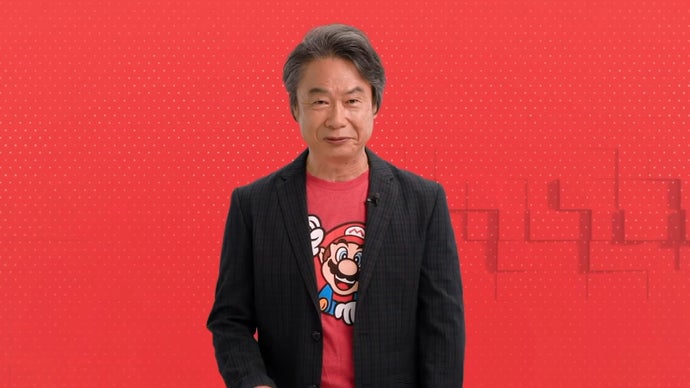
Miyamoto Says the Spec Race Is Over — Nintendo's Secret Weapon Is Gameplay Nobody Else Can Make
Key takeaways
- Miyamoto told Famitsu that consumers have largely moved past prioritizing hardware specs, viewing seamless software access as the new benchmark for a good gaming device.
- Nintendo's single-architecture development approach is framed as a productivity and creative advantage over rivals managing multiple platforms simultaneously.
- With Switch 2 among the fastest-selling consoles ever and PS6/Xbox Helix still facing cost and supply challenges, Nintendo's philosophy appears validated by current market conditions.
Shigeru Miyamoto, one of gaming's most celebrated figures and a driving force behind decades of Nintendo innovation, has offered a candid take on the current console landscape — and it cuts right to the heart of what separates Nintendo from its rivals. In a recent interview with Japanese gaming magazine Famitsu, Miyamoto suggested that today's players are far less preoccupied with specifications than they once were, a shift he views as both a market reality and a strategic opportunity for his company. His remarks arrive at a pivotal moment, with the Nintendo Switch 2 already tracking as one of the fastest-selling consoles in history.
Miyamoto pointed to the evolution of Nintendo's hardware philosophy since the Wii and DS era, a period when the company first leaned hard into novel control schemes and unconventional play formats. 'I think customers are no longer just looking for specs,' he said, adding that the ideal scenario is one where buying software means you can simply play it on whatever device you already own at home. This vision of frictionless access has quietly defined Nintendo's approach for well over a decade, and it appears to be paying off commercially in a major way.
The legendary creator also addressed the complicated reality of smartphone gaming, acknowledging that while phones are ubiquitous, the fragmented performance landscape across Android and iOS devices creates significant headaches for developers. He framed Nintendo's single-architecture approach — building games for one unified family of hardware — as a genuine production advantage that keeps development focused and efficient. He even joked about wanting to 'make a living with minimal effort,' using humor to underscore a serious point about streamlining creative pipelines.
Miyamoto's comments land against a backdrop of considerable turbulence for Sony and Microsoft. Both PlayStation and Xbox are grappling with the pressures of next-generation hardware development, facing hardware supply challenges and cost structures that could make their upcoming consoles — PS6 and Xbox Helix — difficult sells for mainstream consumers. Nintendo, by contrast, has already cleared that hurdle with the Switch 2's launch and is now consolidating its installed base while competitors remain in limbo.
The contrast in strategy between the three platform holders has rarely felt so stark. Sony is reportedly scaling back its PC porting ambitions, while Xbox continues to navigate an identity crisis around whether it primarily wants to be a platform holder or a third-party publisher. Nintendo, meanwhile, is simply selling games that only it can make, on hardware that works exactly as advertised. If Miyamoto's read on consumer priorities is correct — and the sales figures suggest it is — the company's philosophy of 'gameplay over graphical glory' may be the most durable competitive moat in the industry.
The bigger picture
Miyamoto's framing deserves serious industry attention because it reflects something the broader gaming market has been slow to fully absorb. The traditional console arms race — measured in teraflops, ray tracing capabilities, and frame rates — was always a conversation that resonated more loudly with enthusiast press than with the average buyer. Nintendo recognized this disconnect earlier than most, and the commercial performance of the Switch family is essentially a decade-long proof of concept. The Switch 2's rapid sales trajectory suggests that lesson hasn't worn thin.
What makes the competitive implications particularly interesting is that Sony and Microsoft are still largely operating within the old paradigm, where raw power justifies premium pricing and drives hardware adoption. That model is showing cracks. Rising development costs mean that chasing graphical fidelity is becoming economically unsustainable even for studios with enormous resources, and consumers are increasingly resistant to paying more for incremental visual gains. Nintendo, by opting out of that race almost entirely, has insulated itself from pressures that are actively destabilizing its rivals' business models.
The risk for Nintendo, of course, is that 'gameplay only we can make' is a promise that requires constant creative delivery. The company's first-party pipeline has been remarkably strong, but it is not infinitely scalable. If Nintendo ever enters a prolonged software drought — as it has at points in its history — the lack of third-party parity becomes a genuine liability. Readers should watch how the Switch 2's third-party support matures over the next 18 months, and whether Nintendo can sustain release cadence as the platform enters its growth phase.
We flagged this Miyamoto interview as essential coverage the moment it surfaced, because it captures something rarely articulated this plainly by someone with his level of industry influence. At LagPing, we spend a lot of time tracking hardware specs, frame rate analyses, and console sales figures — but this story asks a more fundamental question about whether any of that actually drives purchasing decisions for most people anymore. That question matters enormously right now, with two major platform holders about to ask consumers to spend significant money on next-generation hardware whose value propositions still feel murky. Miyamoto isn't just making a philosophical argument here; he's describing the strategic logic behind one of gaming's most sustained commercial success stories. We think that context is worth sitting with carefully, especially for readers who follow the console market closely and want to understand why Nintendo keeps winning on its own terms.
As an Amazon Associate, LagPing earns from qualifying purchases. Product links are affiliate links.
You might also like

SpaceX Eyes Direct Consumer Mobile Subscribers After EchoStar Spectrum Buy
3d ago

Ted Lasso Season 4 Could Be the Boost Apple TV+ Needs in a Crowded Streaming Race
3d ago

Shoreline Mafia's Fenix Flexin Faces Fan Backlash Over Suspected AI-Generated Billboard Hit
6d ago

Owlcat Would Embrace Making BG4 Despite Industry Fear — But Says Copying Larian Is a Guaranteed Failure
Jul 31