Peak's Developers Close Out the Co-op Climber With Two New Biomes and No Plans to Extend It
Key takeaways
- The Final Ascent adds two new biomes — Gloom and The Citadel — as Peak's last major update.
- Developers Landfall and Aggro Crab confirmed Peak is intentionally not a live-service 'forever game'.
- Each new biome introduces distinct environmental hazards and navigation challenges for returning players.
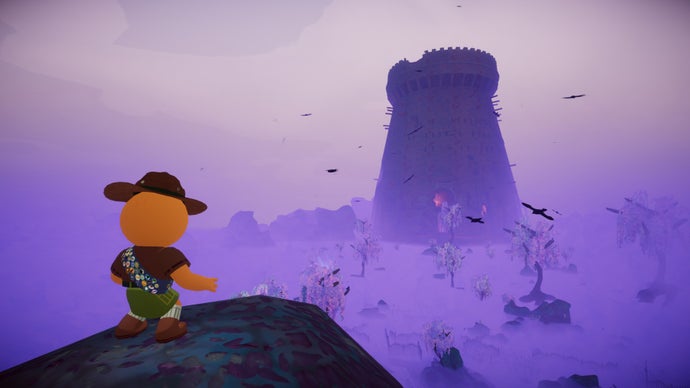
The Final Ascent, the last scheduled major update for Peak, is now live — bringing two new biomes, Gloom and The Citadel, to the co-op climbing game developed by Landfall and Aggro Crab. Gloom is a dense, foggy environment populated by towering trees, mysterious bells, and ominous spike formations, while The Citadel leans into a castle aesthetic complete with swinging spiked balls, hidden arrow traps, and timed spear-floor gauntlets that demand careful footwork. Together, they represent the final chapter of content the studios had planned for the title since launch.
Peak drew considerable attention when it released, earning a reputation as a punishing but rewarding cooperative experience that thrived on communication and coordination between players. Landfall, known for Totally Accurate Battle Simulator, and Aggro Crab, the studio behind Another Crab's Treasure, collaborated on the project as a relatively compact co-op experience rather than a sprawling, years-long live-service undertaking. That philosophy was baked into the design from the beginning, though it runs against the grain of how many modern multiplayer games are positioned.
In statements accompanying the update, both studios explained their reasoning for drawing a hard line under the game's content roadmap. Rather than chasing engagement metrics with a continuous drip of seasonal content, they opted to ship a complete, curated experience and then let it stand on its own. It is a stance that feels increasingly unusual in a multiplayer landscape dominated by battle passes, rotating events, and FOMO-driven update cycles.
The Final Ascent had been teased the previous week, giving the community time to anticipate what the studios described as a meaningful send-off rather than an abrupt stop. The two new biomes add meaningful mechanical variety to the game's late-stage climbing sequences, with each environment introducing distinct hazard timing and navigation puzzles that differ from earlier areas. Players who have already completed Peak's existing content will find fresh reasons to return without the experience being diluted by filler.
Whether the game retains a healthy player population now that major updates are complete will be an interesting test of how well its core loop holds up without the pull of new content drops. Landfall and Aggro Crab appear unconcerned, betting that what they shipped is enough — a confident, if unconventional, position for a multiplayer title in 2025.
The bigger picture
The decision by Landfall and Aggro Crab to end Peak's update cycle deliberately rather than extend it indefinitely puts the two studios in rare company. Most multiplayer games today are architected around continuous content as a retention mechanism, with publishers measuring success in daily active users and season pass revenue rather than overall player satisfaction. By stepping off that treadmill early, the developers are implicitly arguing that a tighter, finished experience has more lasting value than an endlessly expanding one — a position that challenges how the industry typically justifies multiplayer game pricing.
For rivals in the co-op space, this is worth watching. Games like Deep Rock Galactic and Among Us have shown that community goodwill can sustain a multiplayer title long after its active development winds down, but those games benefited from years of free updates that built player habits. Peak is making a different bet: that quality of design outlasts quantity of content. If it retains a devoted audience through word of mouth and organic replays, it becomes a case study that smaller studios can reference when pitching a non-live-service multiplayer game to investors or publishers.
The broader risk is simply obscurity. Without new content to generate social media clips, streamer revisits, or algorithmic recommendation bumps, Peak will need its existing community to carry the conversation. The studios seem aware of this, framing The Final Ascent as a genuine conclusion rather than an abandonment. Whether players receive it that way — or feel stranded without a roadmap — will shape how this experiment is remembered in a year's time.
We think Peak's story deserves more attention than just a patch-notes roundup, and that's exactly why we're covering it this way. The decision to deliberately end a multiplayer game's update cycle is genuinely unusual, and it touches on something we care about at LagPing: the tension between games as products and games as experiences. The live-service model has become so dominant that studios which resist it feel almost countercultural at this point. Landfall and Aggro Crab are two studios we respect for taking creative swings — TABS and Another Crab's Treasure are both titles that refused to play it safe — so their collaborative stance here feels consistent with who they are. We also want to flag this story for readers who are fatigued by endless season passes and battle passes, because Peak's approach is the kind of thing worth celebrating when it happens. Keep an eye on how the community responds over the next few months; the long tail of a 'finished' co-op game is genuinely uncharted territory.
As an Amazon Associate, LagPing earns from qualifying purchases. Product links are affiliate links.
You might also like

Proto Man Returns as Dual Override's Second Playable Character with Aggressive Close-Range Combat
Sep 17

Nvidia's Huang Defends 70% Revenue Forecast as Rivals Close In
Sep 11

Halloween: The Game Quietly Kills Closet Minigame After Age-Gap Controversy
Sep 7

Lenovo Finally Speaks on Legion Go Bricking Problem — But Won't Promise Free Repairs
Aug 25