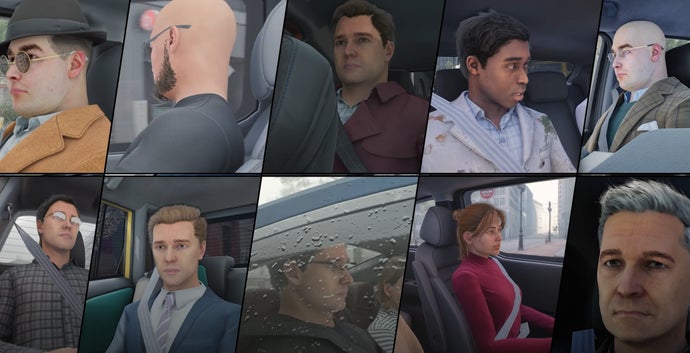
Rideshare Stimulator Gets AI Disclosure After CEO Controversy Over Writer Replacement Comments
Key takeaways
- Rideshare Stimulator's Steam page now confirms AI was used for voice generation, localisation, and an optional Free Ride mode only.
- The main campaign's story, characters, and dialogue were written entirely by human writers, per the new disclosure.
- CEO Matthew Karch apologised privately to former writer Stella Sacco; she has publicly accepted the apology.
Saber Interactive has added a long-absent AI disclosure to Rideshare Stimulator's Steam page, following a public dispute between CEO Matthew Karch and former company writer Stella Sacco that drew widespread attention to the studio's use of generative tools. The disclaimer went live after Karch had previously told IGN the page would only be updated once the game was 'finalised' — a caveat that drew criticism given the game had already been available for wishlisting since July 30. The update arrives amid an apology from Karch to Sacco, which she publicly accepted.
The background to the row lies in Karch's statement that he would have 'been happy to replace' Sacco with AI — a comment that ignited debate across the games industry about the role of generative tools in creative development. Sacco, who left Saber three years ago, responded publicly, prompting an exchange that Karch later dismissed as a 'publicity stunt.' He also noted that Saber's writing staff has actually grown since Sacco's departure, and quipped that if the game needed a profile boost, 'I guess I have Stella to thank for it.'
The AI disclosure itself is more granular than Karch's earlier public remarks suggested. According to the Steam page update, the main campaign's story, characters, and dialogue were written entirely by human writers. AI tools were used specifically for voice generation and portions of localisation — a narrower application than many critics had assumed when the controversy first broke.
AI-generated content is more prominent in Rideshare Stimulator's optional Free Ride mode, which features AI-produced passenger missions and localised dialogue. The disclosure explicitly notes that this mode 'can be skipped by players who prefer to experience only human-written narrative content,' giving players direct agency over their exposure to generated material. The game's radio stations also blend human-composed and AI-generated music, with the latter clearly labelled inside the game itself.
Karch used the situation to advocate more openly for AI's place in game development, acknowledging that his own PR team is 'terrified' of the topic but stating that he welcomes 'a reasonable conversation about how AI can and should help shape gamer experiences.' He also noted that incorporating AI into the experimental Free Ride mode required two additional writers and multiple coders, and that the net cost of those features exceeded what it would have cost to leave them out entirely — an admission that complicates the narrative of AI as a straightforward cost-saving measure.
The bigger picture
The Saber Interactive situation puts a sharp lens on something the games industry has been dancing around for years: the gap between how studios talk about AI internally and how transparently they communicate that use to players. Steam's AI disclosure requirements exist precisely to close that gap, and the fact that Rideshare Stimulator launched for wishlisting without one — only adding it after a public controversy — suggests compliance is still treated as reactive rather than proactive by some developers. Valve will likely face renewed pressure from players and advocacy groups to enforce disclosure rules more stringently at the point of listing, not after criticism forces the issue.
For Saber's competitors, the episode is instructive. Studios like CD Projekt Red and Insomniac have so far kept AI use in major releases either minimal or quiet, but the industry is moving toward a point where disclosure will be commercially unavoidable. Karch's framing — that AI helped with voice generation and localisation rather than replacing core narrative staff — is actually a relatively defensible position, and the detail in the Steam disclaimer reflects that. Had that nuance been communicated from day one, the controversy might never have gained traction.
What readers should watch is whether the optional-mode framing becomes a template other studios adopt: confining AI-generated content to a clearly labelled, skippable layer of the experience rather than weaving it invisibly into the main product. That approach respects player choice while giving developers room to experiment. Karch's own admission that the AI features cost more than omitting them also chips away at the assumption that generative tools are primarily a budget play — at least for now, the economics are murkier than the rhetoric suggests.
We wanted to cover this one carefully because it sits at the intersection of several conversations we care about at LagPing: AI's expanding role in game development, the rights and visibility of game writers, and how transparent studios actually are with their players. The Saber and Sacco story isn't just a corporate spat — it surfaced real anxieties about creative labour in an industry that is changing fast. What struck us most is that when the full picture of Rideshare Stimulator's AI use finally emerged in the Steam disclaimer, it was arguably more reasonable than the initial noise suggested. That's a reminder that disclosure matters not just ethically but strategically. We're also watching this space because Steam's disclosure ecosystem is young, and cases like this will shape how Valve enforces it going forward. Worth staying close to.
As an Amazon Associate, LagPing earns from qualifying purchases. Product links are affiliate links.
You might also like

Halloween: The Game Quietly Kills Closet Minigame After Age-Gap Controversy
Sep 7

EU's AI Act Transparency Rules Take Force, Mandating Chatbot Disclosures and Deepfake Labels
Aug 4
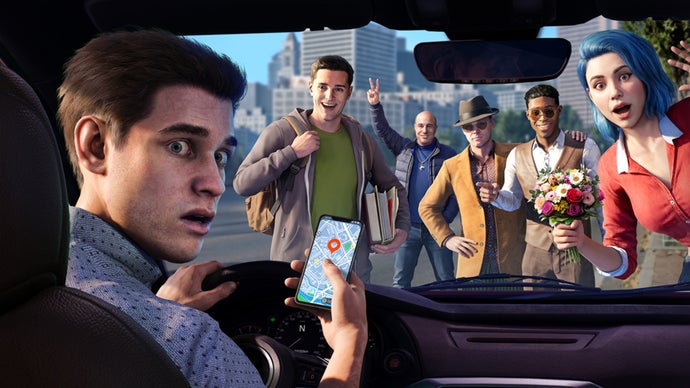
Saber Interactive's Next Publishing Venture Puts You Behind the Wheel of a Surreal Rideshare Nightmare
Jul 31

Hugging Face Boss Demands $100M in Compute and Full Disclosure After AI Agent Breach
Jul 27