Scumhead's Next Game Blends Soviet Aesthetics With Survival Horror in a Nonlinear World
Key takeaways
- Ringwyrm is the next game from Scumhead, blending boomer shooter gameplay with dark fantasy and Soviet-inspired aesthetics
- A standout mechanic requires players to choose between standing still to aim or moving quickly without firing
- The game features a nonlinear interconnected world and a narrative centered on war orphan Edna Gotts, with a planned 2027 release
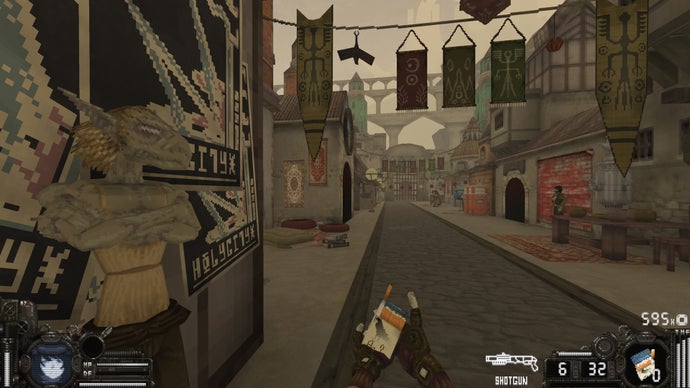
Indie developer Scumhead, known for Mohrta — a game previously described as Morrowind meets Doom — has revealed its next title, Ringwyrm, an immersive first-person action horror shooter that blends fantastical lore with lightly Soviet-inspired aesthetics. The game pushes the studio in a somewhat new direction, leaning more deliberately into boomer shooter territory while maintaining the murky, atmospheric world-building that defined Scumhead's earlier work. Early footage shows a grimy, ragcloth-filtered visual identity that feels distinctly unlike anything else currently on the horizon.
One of Ringwyrm's most intriguing design choices involves its approach to combat and movement. Players who want to aim their weapon must stand completely still, while moving quickly means giving up the ability to shoot accurately. This tension between mobility and precision is not entirely unprecedented in survival horror — older third-person games in the genre employed similar tradeoffs — but applying it to a first-person perspective gives it a fresh and potentially nerve-wracking dimension that could define how combat encounters feel throughout the game.
The world of Ringwyrm is described as nonlinear and interconnected, suggesting an architecture-driven exploration experience rather than a purely linear campaign. This design philosophy aligns with Scumhead's evident appreciation for immersive sim sensibilities and layered environmental storytelling. How well the studio executes this ambition at scale will be one of the key things to watch when the game eventually releases.
Narratively, Ringwyrm is set sixteen years after a conflict called the Iron War, in which a nation named Schovekia was defeated. The remnants of the Schovek people have since migrated to a remote northern location called the Umbral Isle, where they discover a strange arcane substance called Milk that rapidly reshapes their society. Players take on the role of Edna Gotts, a war orphan who is conscripted into a military operation alongside her sisters — a setup that already carries emotional weight and political intrigue.
Ringwyrm currently has no specific release date beyond a general 2027 window. The game is available to wishlist on Steam, and given Scumhead's track record with Mohrta, there is already a meaningful audience paying close attention to whatever the studio does next.
The bigger picture
Scumhead occupies a fascinating niche in the indie space — small enough to move with creative freedom, but with a proven enough track record that its announcements carry genuine anticipation. Ringwyrm appears to double down on the qualities that made Mohrta resonate: dense atmosphere, unconventional world design, and a refusal to sand down the rough edges that give these games their character. In a market increasingly crowded with polished but personality-free shooters, that roughness is a competitive advantage rather than a liability.
The movement-versus-aiming mechanic is worth watching closely from a design perspective. It introduces a layer of strategic vulnerability that forces players to commit — do you hold your ground and fire, or break and run? This kind of deliberate, high-stakes decision-making is rare in first-person shooters, and if executed well, it could become a defining feature that sets Ringwyrm apart from its peers. The risk, of course, is that it feels punishing rather than empowering, especially for players accustomed to more fluid modern shooters.
The Soviet aesthetic angle also taps into something that remains underexplored in Western-developed games. While we have seen Eastern Bloc influences surface in games like STALKER and Atomic Heart, the fantasy-Soviet fusion Ringwyrm is going for — applied to original lore rather than real-world history — opens up creative territory that feels genuinely fresh. If the narrative delivers on the promise of its premise, Ringwyrm could arrive in 2027 as one of the more talked-about indie releases of that year.
We are covering Ringwyrm because it represents exactly the kind of game LagPing exists to spotlight — one that takes creative risks in a space where commercial pressure so often flattens originality into familiarity. Scumhead is a developer that has already earned credibility with Mohrta, and a follow-up that swings this ambitiously in terms of aesthetics, mechanics, and world-building deserves attention long before it hits shelves. The 2027 window means there is plenty of time for this game to build momentum, and we want our readers to be part of that conversation early. The Soviet-fantasy fusion, the survival horror movement tradeoffs, and the nonlinear world design are each individually interesting — together, they paint a picture of a genuinely distinct game. We will be keeping a close eye on Scumhead's updates as development continues.
As an Amazon Associate, LagPing earns from qualifying purchases. Product links are affiliate links.
You might also like

Hips N Noses Blends Café Brewing With Dream Combat in a World Where Nobody Sleeps
6d ago

Saber Interactive's Next Publishing Venture Puts You Behind the Wheel of a Surreal Rideshare Nightmare
Jul 31

Anthropic Lands Massive AMD Deal: MI450 GPUs and Helios Racks Power Next AI Leap
Jul 23

ServiceNow's $40M Stake in India's BusinessNext Targets AI-Driven Banking Globally
Jul 23