Sony's Physical Game Exit Could Hollow Out the Retail Ecosystem Built Around PlayStation
Key takeaways
- Sony will stop manufacturing physical games by January 2028, replacing retail boxes with digital-only formats including likely voucher codes
- PlayStation's deep physical presence in Asian retail markets — particularly Tokyo and Taipei — represents an organic brand amplification that digital storefronts cannot easily replicate
- Games delisted from digital platforms, like Jump Force, will become permanently inaccessible once physical production ends, raising serious concerns about game preservation
When Sony confirmed it would cease manufacturing physical game media by January 2028, the immediate conversation centered on consumer rights, backward compatibility, and the fate of personal game libraries. Those are legitimate concerns, but there is a quieter, slower-burning consequence that deserves equal attention: the potential unraveling of PlayStation's global retail footprint. For decades, the sight of Sony's branding on store shelves has functioned as a form of ambient advertising — constant, trusted, and commercially potent in ways that are genuinely difficult to quantify.
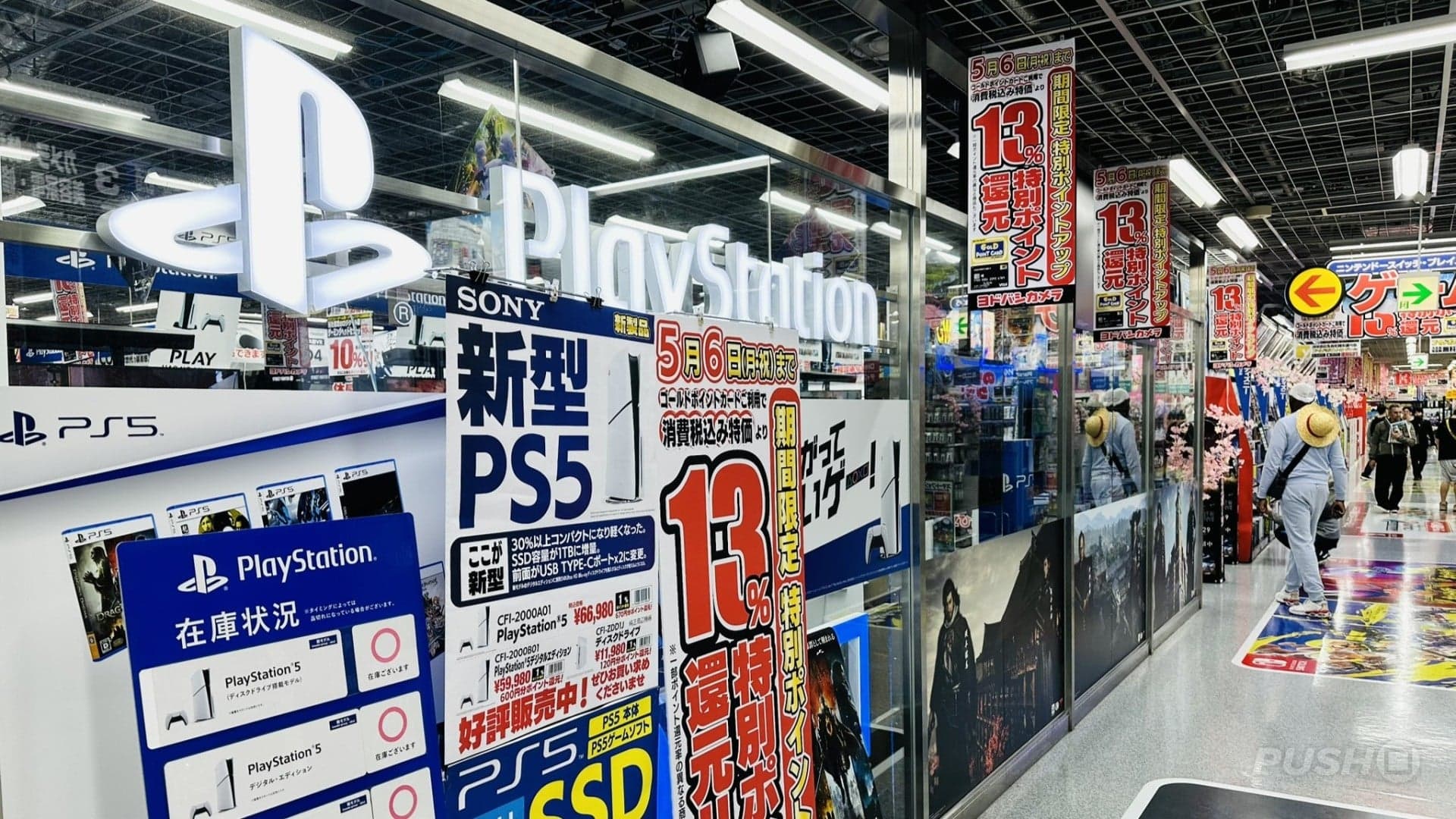
Anyone who has spent time gaming-adjacent in Asia will understand just how deeply PlayStation is woven into local retail culture. In Taipei, the underground shopping corridors near Ximen station house clusters of independent stores that brand themselves entirely around Sony's consoles, displaying PlayStation logos as their primary storefronts and stocking shelves almost exclusively with Sony-compatible titles. Tokyo tells a similar story — major electronics chains like Bic Camera and Yodobashi dedicate significant floor space to elaborate PlayStation displays, with partitioned showrooms and life-size promotional installations that feel more like brand experiences than simple product shelving.
Sony's official statement on the transition noted that games will still be available at retail in digital format, which in practice almost certainly means voucher cards and download codes. While that preserves a nominal presence on shelves, it fundamentally changes the texture of the shopping experience. A wall of boxed games with cover art, physical manuals, and collectible packaging communicates cultural weight in a way that a rack of prepaid cards simply does not. Independent retailers, in particular, will struggle to build an identity or brand association around selling codes.
There is also a preservation argument that cuts to the heart of gaming history. Titles like Jump Force — a Bandai Namco fighting game that was delisted from every digital storefront in 2022 — exist now only in physical form. Had the game launched after the 2028 cutoff, it would essentially be unownable upon its digital removal. This is not an isolated edge case; licensing disputes, publisher closures, and platform policy changes routinely scrub games from digital libraries, making physical media the last line of archival defence for the medium.
Sony's position is understandable from a financial and logistical standpoint — physical game sales have declined steadily, and the infrastructure costs of manufacturing, distributing, and managing returns are substantial. But critics argue the company is accelerating a transition rather than responding to one that has already completed. Estimates suggest roughly 20 percent of the gaming audience still prefers physical purchases, a figure that represents millions of consumers and an entire ecosystem of specialist retailers whose livelihoods depend on that preference remaining commercially viable.
The bigger picture
Sony's move is bold, but it carries a brand risk that the company may be underestimating. PlayStation's dominance over Microsoft in markets like Japan is not purely a function of hardware sales figures — it is reinforced daily by physical visibility in stores, by the logo appearing on storefronts, by the tactile experience of browsing shelves covered in PlayStation titles. That kind of organic, grassroots brand reinforcement is extraordinarily difficult to manufacture through digital storefronts and streaming ads alone. When those shelves thin out or disappear entirely, Sony loses a marketing channel it has never had to pay for.
For independent retailers, particularly in Asia where PlayStation retail culture runs deep, this transition could be existential. Small specialist shops cannot pivot easily to a model built around digital code redemption — there is no margin, no identity, and no browsable product to anchor the customer experience. Chain retailers may adapt by repurposing floor space, but the boutique gaming stores that have thrived on PlayStation's coattails for years face a much bleaker outlook. The irony is that these stores have done free promotional work for Sony at street level for decades, and the platform is now pulling the product that made that relationship possible.
Looking ahead, this decision will intensify scrutiny on Sony's digital storefront policies, particularly around game preservation and delisting practices. If physical media is no longer an option, the longevity of digital purchases becomes the central consumer rights battleground. Regulators in the EU and UK have already shown interest in digital ownership frameworks, and Sony's 2028 deadline may well accelerate legislative pressure on the industry as a whole. Readers should watch for how Sony handles its legacy catalog and whether it introduces any formal preservation commitments to soften the blow.
We decided to cover this story because it goes well beyond the usual digital-versus-physical debate, touching on something we find genuinely fascinating here at LagPing: the way gaming culture exists physically in the world, not just on screens. The retail ecosystems described in Asia — Taipei's Ximen corridor, Tokyo's Bic Camera showrooms — represent a kind of gaming culture that many of our Western-based readers may never have encountered, and we think that perspective deserves to be part of this conversation. Sony's decision lands differently when you've stood inside a store that has built its entire identity around PlayStation branding. We're also conscious that the preservation angle isn't getting enough mainstream coverage — the Jump Force situation is a quiet but potent illustration of what gets lost permanently when digital is the only option. This matters now because 2028 is closer than it feels, and the decisions retailers make in the next 12 to 18 months will shape what gaming's high street looks like for a generation. We'll keep following this closely.
As an Amazon Associate, LagPing earns from qualifying purchases. Product links are affiliate links.
You might also like
Sony's Social Media Comeback After Physical Game Cuts Triggers 57K-Reply Firestorm
Push Square

Sony's PS5 Playtime Data Vanishes for Disc Owners Amid Growing Physical Media Concerns
Push Square
Sony Caps PS5 Disc Drive Purchases Amid Rush Before 2028 Physical Game Sunset
Push Square

T-Mobile Fights Broadcom in Court Over VMware Support While Racing to Exit the Platform
Ars Technica