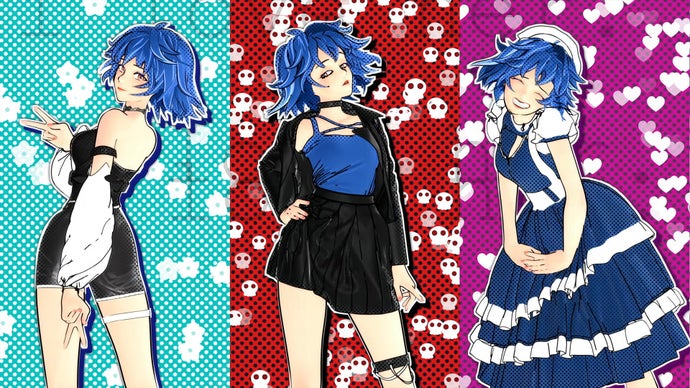
Spider-Verse Alumni Debut Dark VN Where a Manga Creator's Mind Births a Haunting Anime Girl
Key takeaways
- Tulpa the Unseen Lover is developed by former Spider-Man: Into the Spider-Verse animators.
- The psychological visual novel follows a depressed manga artist who manifests an ominous anime girl.
- No release date has been announced yet, but the project has generated early attention for its premise.
Tulpa the Unseen Lover, a psychological visual novel from a team of former Spider-Man: Into the Spider-Verse animators, has emerged as one of the more unusual and intriguing indie announcements in recent memory. The game centers on a manga artist struggling with depression who begins manifesting a haunting, anime-styled girl from the depths of his own psyche. The premise blends the intimacy of visual novel storytelling with genuinely unsettling psychological horror undertones, a combination that immediately sets it apart from the crowded field of romance-adjacent VNs.
The development team's background in Spider-Verse animation lends Tulpa an immediate credibility when it comes to visual ambition. That film, produced at Sony Pictures Animation, was celebrated globally for pushing the boundaries of what animated storytelling could look like, and the former animators behind Tulpa appear to be channeling that same experimental spirit into an interactive format. The shift from Hollywood animation to indie game development is notable, but not unprecedented — many artists from prestige productions have increasingly found creative freedom in smaller, self-directed projects.
The concept of a creator being consumed or destabilized by their own fictional creations has deep roots in Japanese manga and animation culture. Works exploring the tension between artist and art, reality and imagination, have long resonated with audiences drawn to psychological narratives. Tulpa appears to tap directly into that tradition, framing its central relationship — between the manga artist and the manifested girl — as simultaneously comforting and deeply ominous.
Visual novels as a genre have seen a meaningful renaissance on PC and console platforms over the past several years, with titles like Disco Elysium and Norco expanding what Western audiences expect from text-driven interactive fiction. Tulpa's psychological horror angle and its striking artistic pedigree position it to stand out even within that growing field. The anime-influenced aesthetic, combined with the creators' animation background, suggests a game that will prioritize visual storytelling as much as written narrative.
No firm release date has been announced for Tulpa the Unseen Lover at this stage, but the project has already attracted significant attention based on its premise and the team's credentials alone. Players and critics alike will be watching closely to see how the Spider-Verse alumni translate their animation expertise into an interactive medium where pacing, player agency, and tone work differently than in film.
The bigger picture
The pedigree attached to Tulpa the Unseen Lover is genuinely unusual for an indie visual novel, and that distinction matters commercially as much as creatively. Former Spider-Verse animators carry real name recognition — that film won the Academy Award for Best Animated Feature and sparked an entire visual revolution that studios like Netflix and others have since tried to emulate. That brand association will open doors for Tulpa in press coverage and on storefronts where discoverability is brutal, giving it a fighting chance against the thousands of visual novels released annually on Steam.
The psychological horror framing is also a smart differentiator. The visual novel space is heavily saturated with romance and slice-of-life titles, and while those have passionate audiences, they rarely break into mainstream gaming conversation. Titles that lean into darker psychological territory — think Doki Doki Literature Club's subversive approach — tend to generate disproportionate word-of-mouth and cultural buzz. Tulpa's premise, a creator destabilized by an entity born from his own depression, feels genuinely fresh rather than derivative, which is increasingly rare in a genre full of familiar archetypes.
What to watch: how the team handles the tonal balance between the 'cute' and 'ominous' qualities described in the game's premise. That duality is fragile. Lean too far into horror and you lose the emotional intimacy that makes visual novels compelling; stay too cute and the psychological depth evaporates. The Spider-Verse team has proven they can handle tonal complexity in animation — the real question is whether those skills translate cleanly to interactive storytelling, where the player's pace and choices introduce variables that a film never has to manage.
We don't often cover visual novels unless there's something genuinely distinctive pulling us in, and Tulpa the Unseen Lover has several things worth paying attention to. The Spider-Verse connection is the obvious hook, but honestly what grabbed us more is the premise itself — a depressed manga artist whose mind manufactures something he can't fully control is exactly the kind of psychologically loaded concept that the VN format handles better than almost any other medium. We've seen the indie gaming space produce some of the most daring narrative work of the past decade, and projects like this are a big reason why. The fact that animators with Hollywood credits are choosing to make a small, weird, personal game instead of their next prestige production also says something interesting about where creative energy is flowing right now. We'll be keeping a close eye on Tulpa as more details emerge.
As an Amazon Associate, LagPing earns from qualifying purchases. Product links are affiliate links.
You might also like

Snap's AI Assistant Debuts on iPhone and Mac, Bundled With AR Glasses Strategy
6d ago

Hinterland pumps the brakes on Blackfrost, doubles down on Long Dark survival updates
Aug 30

Grokipedia Goes Dark: xAI's AI-Powered Encyclopedia Frozen for Over Three Months
Aug 6

Halo's PS5 Debut Rewrites the Rules With Sprint, Vehicle Hijacking, and Reworked Weapons
Jul 24