Steam Machine Launches With Every PC Game Ever Made — Valve's Bold Alternative to Exclusives
Key takeaways
- Valve engineers confirm no software exclusives are planned for the Steam Machine, citing openness and ecosystem growth as core priorities.
- The full Steam PC library is positioned as the device's competitive advantage over traditional console launch lineups.
- Pricing pressures are worsening according to Valve, with retail costs expected to lag bulk supply pricing by three to six months.
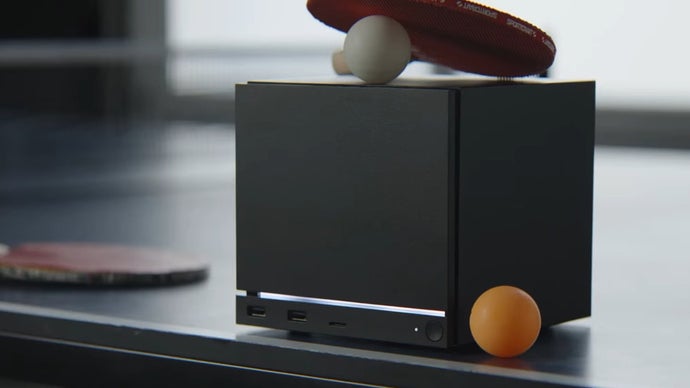
Valve's upcoming Steam Machine is shaping up to be one of the more unusual hardware launches in gaming history — a device that looks like a console, sits under your TV like a console, but refuses to play by console rules when it comes to exclusive software. Speaking with Bloomberg, Valve engineers Yazan Aldehayyat and Loup Griffais offered the clearest explanation yet of why the company has no intention of using game exclusivity to sell the new hardware. In their view, the entire existing PC catalog is the pitch, and that's more than enough.
Aldehayyat emphasized that Valve actively wants room for other manufacturers to build their own Steam-compatible hardware, whether that means higher-performance variants or machines with a different feature set. The company's business logic is straightforward: more people buying PC hardware of any kind ultimately means more customers purchasing games through Steam. Locking software to a single device would undercut that ecosystem-first philosophy entirely and potentially discourage the kind of third-party innovation Valve wants to see flourish.
Griffais went further, articulating a genuinely long-term view of what open hardware competition can achieve. He argued that a rival PC manufacturer entering the space might produce meaningful technical innovations — advances that eventually become universal and raise the quality of PC gaming for everyone, leading to more game sales industry-wide. It's an unusually collaborative stance for a company launching a new consumer product, and it stands in stark contrast to the walled-garden strategies deployed by Sony, Microsoft, and Nintendo.
The absence of exclusives also quietly lays to rest the seemingly endless rumors about a new Half-Life appearing as a Steam Machine launch title. Griffais put it plainly: restricting where players can access a game is simply not a model Valve finds compelling. For newcomers arriving at PC gaming through the Steam Machine, the upside is genuine — thousands of titles available from day one, far exceeding what any traditional console launch library looks like.
There is, however, a significant cloud hanging over the hardware's appeal. Aldehayyat acknowledged that pricing conditions are actually worsening, with retail shelf prices lagging behind bulk supply costs by three to six months. For a device already expected to carry a four-figure price tag, that trajectory is unlikely to bring the Steam Machine to a mass-market audience anytime soon, with early adopters almost certainly skewing toward enthusiasts rather than first-time PC gamers.
The bigger picture
Valve's no-exclusives stance is philosophically admirable, but it also conveniently sidesteps a genuine weakness: the company doesn't currently have a flagship software title capable of moving hardware the way Halo once did for Xbox or Astro Bot does for PlayStation. Framing the entire Steam library as a 'launch exclusive' is clever messaging, but it's worth asking whether a first-time buyer shopping in a retail environment will actually perceive that breadth as a compelling reason to spend over a thousand dollars, or whether it will read as a non-answer.
The competitive implications are interesting, particularly for Sony and Microsoft. Valve is essentially arguing that exclusivity — the cornerstone of console platform strategy for decades — is a limiting rather than a growth-driving model. If the Steam Machine gains traction among living-room PC converts, it puts pressure on the traditional console makers to justify their walled gardens at a time when both Xbox and PlayStation are already experimenting with multiplatform releases. Valve's approach could quietly normalize the idea that hardware should compete on performance and experience, not on software hostage-taking.
What readers should watch closely is whether third-party manufacturers actually step in to build competing Steam-compatible devices, which would be the real validation of Valve's ecosystem bet. If the Steam Machine sells modestly but spawns a broader category of living-room PCs from ASUS, Lenovo, or others, Valve wins regardless of its own unit numbers. The pricing warning from Aldehayyat is the most immediate risk — if costs remain punishing through 2026 and into 2027, the device may never escape the enthusiast niche it currently occupies.
We're covering this story because it touches on something we think about a lot at LagPing — the slow blurring of the line between consoles and PCs, and what that means for how people buy and play games. Valve's decision to reject the exclusivity model isn't just a business strategy; it's a direct philosophical challenge to how the console industry has operated for forty years, and that deserves real scrutiny rather than a press-release summary. We're also mindful that the Steam Machine sits at an unusual moment in gaming: hardware costs are climbing, platform boundaries are softening, and players are increasingly resistant to fragmented libraries. This announcement lands right in the middle of all of that. We'll keep following the Steam Machine's rollout closely, because whether it succeeds or stumbles, it's going to tell us a lot about where the living-room gaming market is actually heading.
As an Amazon Associate, LagPing earns from qualifying purchases. Product links are affiliate links.
You might also like

Roku Launches Around-the-Clock AI Content Channel Amid Growing FAST Debate
15h ago

MachineGames Drops Free 19-Map Quake Campaign to Mark the Shooter's 30th Birthday
1d ago

Quake Turns 30: Dawn of the Machine Brings 19 Free Levels Built With MachineGames
1d ago

Everything Students Actually Need This Fall: Our 2026 Essential Gear Roundup
6d ago