Type Every Move or Watch Your Crew Die: This Spaceship Crawler Makes You Earn It
Key takeaways
- Remote Control requires players to type every in-game action in real time, replacing conventional controls entirely
- Human proxies aboard the derelict spaceship The Pelican can get sick and die, and losing too many costs the player their job in-game
- A Steam demo is live now ahead of a planned autumn 2026 release
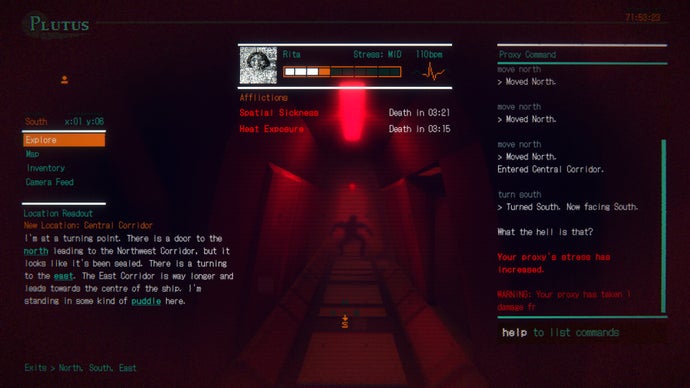
Indie games have long pushed back against the muscle memory automation of modern controls, but Remote Control takes that ambition to a genuinely strange and compelling place. Developed and previewed ahead of an autumn 2026 launch, the game strips away conventional input entirely — no buttons, no joysticks, no hotkeys — and replaces them with typed commands entered in real time. Want your character to walk forward? Type it. Want them to check a suspicious door or use a med kit? Type that too. It is a deliberately deliberate system, and that friction is very much the point.
The premise frames all of this beautifully. Players take on the role of a remote operator working for a shadowy and clearly dysfunctional corporation, tasked with sending human proxies onto The Pelican, an abandoned spaceship with a troubling and unknown history. Before each mission, you select your proxy from a roster that tracks their personalities, preferences, and mission histories. The grim kicker is that most of your previous proxies are already dead — casualties of your earlier sessions — making every new outing feel weighted with consequence from the very first keystroke.
Once a mission begins, the gameplay shifts into something resembling a dungeon crawler filtered through a keyboard. The environment is hostile in multiple ways: physical hazards lurk throughout the ship, and hints of some other presence — something or someone — add an atmosphere of dread that pure mechanical challenge alone could not manufacture. Proxies can fall ill and die from neglect or misfortune, meaning resource management and attentiveness are just as important as quick typing fingers. Lose too many proxies and the corporation loses patience with you entirely.
What makes Remote Control stand out in a crowded indie landscape is its insistence on tactile engagement as a design philosophy. The developers have leaned into the parallel between what the player does physically — typing — and what the character does narratively, creating an unusual but genuine layer of immersion. It is admittedly not a frictionless experience, and moments of frustration are baked into the design rather than polished away. That honesty about its own difficulty is part of what makes the concept so intriguing to follow.
Remote Control does not yet have a confirmed release date beyond the autumn 2026 window. A playable demo is currently live on Steam, giving curious players a chance to test whether the typing mechanic clicks for them before the full launch. Given how divisive unconventional input systems can be, the demo represents a smart move by the developers to let the experience speak for itself rather than rely on description alone.
The bigger picture
Remote Control arrives at a moment when indie developers are increasingly willing to use input itself as a design statement rather than just a means to an end. Games like Typing of the Dead and Hypnospace Outlaw have shown that unconventional interfaces can deepen emotional engagement rather than hinder it, and Remote Control appears to be making a genuine case for that same philosophy applied to exploration and survival horror. The risk is real — a significant portion of players will bounce off typing-based controls before the atmosphere has time to work on them — but for those who stay, the payoff in tactile connection to the fiction sounds substantial.
From a competitive standpoint, the game occupies a niche that few developers are willing to claim. The derelict spaceship setting and corporate horror framing put it in conversation with titles like Alien: Isolation and Observation, but the input system creates a mechanical identity that neither of those games could replicate. That distinctiveness matters enormously in a Steam marketplace where discoverability depends increasingly on a game having something genuinely unusual to say about itself in a thumbnail and a short trailer.
The detail worth watching as the autumn release approaches is how the developers handle difficulty balancing around the typing mechanic. If the game's pacing allows players to feel competent even under pressure, Remote Control could become a minor cult classic. If the friction tips too far toward tedium in later stages, the concept may struggle to hold audiences through a full playthrough. The demo is the real test, and how players respond to it publicly over the coming weeks will likely shape how the launch is positioned.
We don't cover every quirky indie pitch that lands in our inbox, but Remote Control earned attention here because it is doing something genuinely rare — it is using the act of input as part of the story it wants to tell. At LagPing, we care about games that push back against the defaults of the medium, and a spaceship horror crawler where you literally type every command to keep another person alive is exactly the kind of friction worth examining. The autumn 2026 window is close enough that a demo is already shaping real player impressions, which means this conversation is happening now rather than in some abstract future. We also think the corporate horror framing — losing your job if your proxies keep dying — layers on a kind of mundane dread that feels very contemporary. This one deserves eyes on it early.
As an Amazon Associate, LagPing earns from qualifying purchases. Product links are affiliate links.
You might also like

2007 FromSoftware Prototype Reveals Demon's Souls Once Let Players Switch to First-Person View
17h ago

Midnight Club 5 Had London Prototypes Before Rockstar Pulled the Plug, Designer Reveals
4d ago

Everything Students Actually Need This Fall: Our 2026 Essential Gear Roundup
6d ago

Satya Nadella Warns Enterprises: Trusting OpenAI or Anthropic Alone Could Cost You Everything
Jul 30