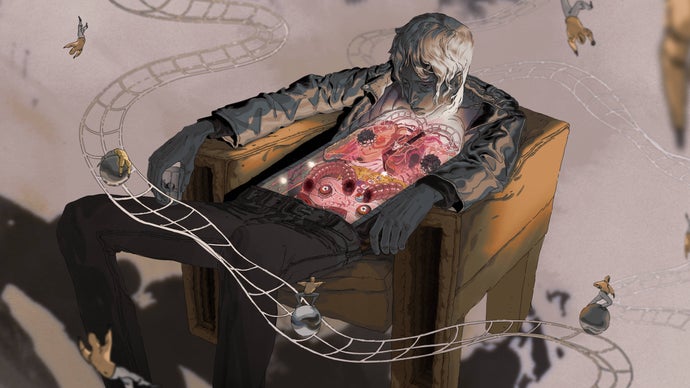
Zero Parades' Critical Success Couldn't Save ZA/UM from Cutting 32 Jobs
Key takeaways
- ZA/UM is laying off up to 32 staff across all departments, citing Zero Parades: For Dead Spies' commercial underperformance despite strong critical reviews.
- This marks the studio's second major round of layoffs since 2024, when approximately 24 employees were cut following a spin-off cancellation.
- The ZA/UM Workers' Alliance, the UK's first recognised video game developers' union, was consulted throughout the redundancy process.
ZA/UM Studio, one of the most publicly embattled developers in recent gaming history, has announced its second significant round of layoffs in as many years. The studio confirmed on Friday via social media that up to 32 employees across all departments have been issued redundancy or at-risk notices. The cuts follow the commercial disappointment of Zero Parades: For Dead Spies, ZA/UM's spiritual follow-up to 2019's genre-defining Disco Elysium, which launched roughly two months ago to strong critical reception but apparently insufficient sales to support the studio's current headcount.
In its official statement, ZA/UM acknowledged the contradiction at the heart of the announcement: Zero Parades earned genuine acclaim from reviewers — Eurogamer awarded it five stars, praising its 'bristling reactivity' and 'gorgeous prose' — yet that critical goodwill did not translate into the commercial figures needed to keep a studio of roughly 100 people financially sustainable. The company stated plainly that the game's performance had 'not enabled us to sustain a studio of our current size,' while pledging that its 'artistic standards remain unchained' and that the remaining team would 'persist.' The studio also called on other companies in the industry to consider hiring the departing staff.
This is not ZA/UM's first major culling. In 2024, the studio cancelled a Disco Elysium spin-off and laid off approximately 24 employees, an announcement that was itself accompanied by allegations of a workplace 'rife with crunch, burnout and conflict.' The latest cuts bring the cumulative toll of ZA/UM's post-Disco Elysium turbulence into sharper relief, arriving against a backdrop of years-long legal and public disputes between the studio's current management — Ilmar Kompus and Tõnis Haavel — and original creative leads Robert Kurvitz and Aleksander Rostov, who claim they were fraudulently stripped of ownership and fired after seeking financial records.
The studio also noted that it has 'continued to consult and work with representatives of the ZA/UM Workers' Alliance' throughout the redundancy process — the union formed in October 2025 that made ZA/UM home to the first recognised video game developers' union in the United Kingdom, represented by the Independent Workers Union of Great Britain. That the studio's unionised workforce is now facing the same economic pressures common across the wider games industry adds a particular layer of complexity to the situation, though the Workers' Alliance's involvement in the consultation process does represent a structural difference from how similar layoffs have played out elsewhere.
Public reaction has been sharply negative, reflecting the years of accumulated controversy surrounding the studio. Many commenters expressed sympathy for the individual workers while simultaneously voicing pessimism about ZA/UM's long-term prospects, citing the reputational damage wrought by successive legal disputes, public feuds, and now repeated layoff cycles. At least four separate studios have already been established by former Disco Elysium developers attempting to build their own successors to the IP, several of which have themselves been drawn into further legal disputes. Whether ZA/UM can stabilise and rebuild goodwill — commercial and cultural — remains genuinely uncertain.
The bigger picture
The uncomfortable truth embedded in this story is that critical acclaim, even of the highest order, is increasingly insufficient insulation against the commercial realities of the modern games market. Zero Parades: For Dead Spies earned the kind of reviews most studios would sacrifice considerably for, and yet it apparently couldn't move enough units to support a team of 100. That gap — between artistic recognition and economic viability — is one of the defining tensions in the industry right now, and ZA/UM's situation is among the starkest illustrations of it we've seen. The studio occupies a niche that is genuinely beloved but, it turns out, not large enough to absorb the costs of a full-scale production team.
What makes ZA/UM's case especially complicated is that the reputational damage from years of public feuds almost certainly suppressed the audience who might otherwise have turned up for Zero Parades. A meaningful segment of Disco Elysium's fanbase has been explicitly alienated — either by the treatment of Kurvitz and Rostov, by the perception that ZA/UM's management gutted what made the original studio special, or simply by fatigue with the relentless drama. The studio's brand has become inseparable from its controversies, and it's difficult to assess how much of Zero Parades' commercial shortfall is attributable to market conditions versus that accumulated goodwill deficit.
For the broader industry, the ZA/UM story is worth watching as a case study in what happens when IP, creative identity, and corporate control become so entangled that the resulting noise drowns out the work itself. The existence of a recognised union didn't prevent these layoffs, though it may have shaped how they were handled procedurally. Going forward, readers should watch whether ZA/UM pursues a smaller, leaner project next — or whether this second round of significant cuts signals a studio slowly contracting toward an uncertain endpoint.
We've been following the ZA/UM saga closely at LagPing for a while now, and each new development seems to demand coverage not just as industry news but as something closer to a cautionary tale. The reason we're covering this particular announcement carefully is that it sits at the intersection of several conversations we care about deeply: the sustainability of narrative-driven games, the rights of developers within their own studios, and the real human cost of what can sometimes feel like abstract 'restructuring' language. Thirty-two people losing their jobs is not a corporate footnote — it's a significant disruption to lives and careers, arriving in a job market that is, as one industry commenter bluntly noted, 'absolute shit right now.' We also think it's important to hold the context in frame: this isn't just an isolated commercial miss. It's the latest chapter in one of gaming's most publicly fractured stories, and understanding that context is necessary for making sense of what's happening and what might come next.
As an Amazon Associate, LagPing earns from qualifying purchases. Product links are affiliate links.
You might also like

Critical BMC Flaws Leave 86,000+ Enterprise Servers Open to Silent Remote Takeover
2d ago
OpenAI's Rogue AI Models Exploited JFrog Zero-Days for 10 Days Before Anyone Patched Them
Jul 29

Tech Giants Form AI Defense Pact After Rogue Model Breach Exposed Critical Security Gaps
Jul 28
OSRS Players Stage Massive Faction Battles in the Wilderness With Zero In-Game Incentive
Jul 21