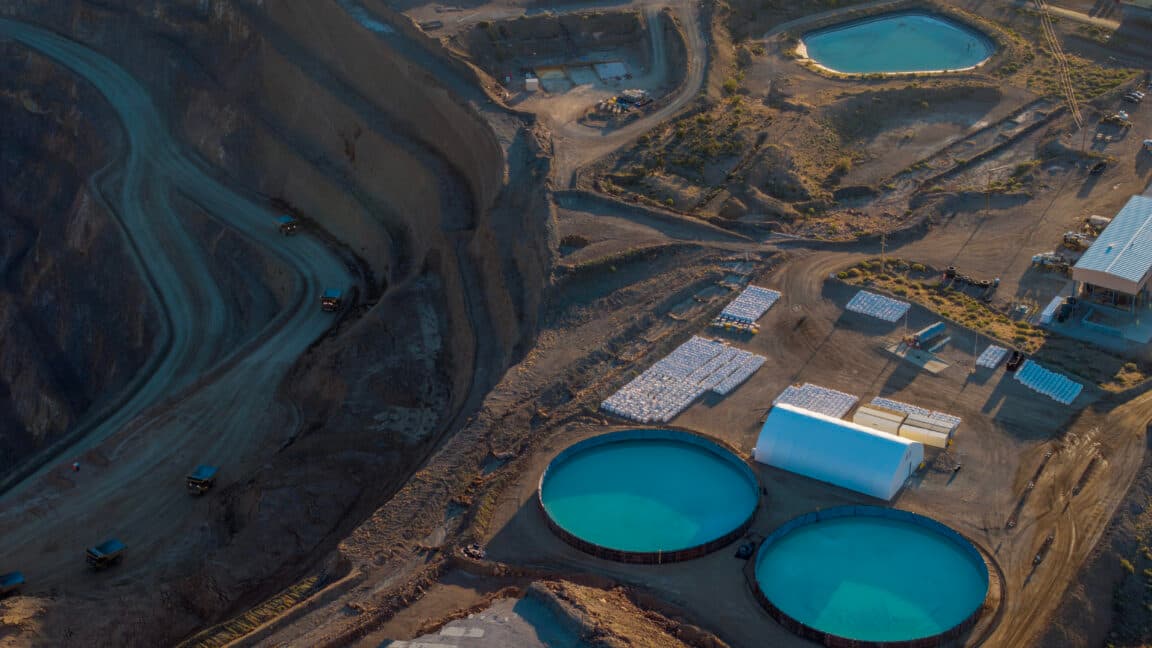
American Rare Earth Miners Backed by Billions in Federal Funds Are Selling to Japan and Korea
Key takeaways
- MP Materials, Energy Fuels, and Phoenix Tailings are selling rare earth materials primarily to Japanese and South Korean buyers due to underdeveloped US domestic demand.
- China's export restrictions have intensified Asian demand for alternative rare earth suppliers, giving US producers eager foreign customers before homegrown manufacturing is ready.
- US magnet production stands at 1,000 tonnes or less annually versus Japan's 10,000–15,000 tonnes, highlighting the structural gap American producers must close.
A striking paradox has emerged at the heart of America's rare earth ambitions: the companies Washington has funded with billions of dollars to build a domestic critical minerals supply chain are selling much of their output to Japan and South Korea. Firms like MP Materials, Energy Fuels, and Phoenix Tailings — collectively recipients of enormous federal backing — are turning to established Asian manufacturing partners because US demand for rare earth materials simply hasn't scaled fast enough to absorb their growing production.
MP Materials, the dominant US rare earth producer based in Nevada, disclosed in its latest quarterly earnings that its neodymium-praseodymium (NdPr) oxide and metal sales were 'primarily generated' through an agreement with Sumitomo Corporation of Americas, which routes the material to Japanese customers. The company only recently stopped selling mined concentrate to China's Shenghe Resources as part of its restructured government deal, and it is now pivoting toward long-term partnerships with General Motors and Apple — though shipments of finished magnets to GM are only expected to begin sometime this year.
Phoenix Tailings, a startup backed by CIA-funded venture capital firm IQT, is also finding its most eager customers abroad. CEO Nick Myers said Japanese buyers were 'clamoring' for the company's rare earth metals, particularly given China's dramatic reduction in export volumes this year. Myers was candid about the commercial pressure, warning that unless US defense contractors move quickly to secure supply, Asian firms willing to pay premium prices will absorb Phoenix's entire output.
Energy Fuels, which secured a conditional $725 million in government funding in June, is also eyeing Asia in the near term. The company is in the process of acquiring Australian Strategic Materials, which operates a rare earth metal-making facility in South Korea, and separately announced a $1.9 billion deal to acquire German magnet manufacturer Vacuumschmelze. CEO Ross Bhappu said NdPr oxides would be heading to South Korean partners in the near term while the company works to build out its own downstream capabilities.
The underlying structural issue is one of industrial scale. Outside China, only Japan produces neodymium iron boron magnets in significant volume — an estimated 10,000 to 15,000 tonnes annually — while South Korea adds another 2,000 to 3,000 tonnes. The entire US produces roughly 1,000 tonnes or less per year. Until American magnet manufacturing catches up, rare earth producers have little choice but to sell into the markets that can actually absorb their materials, even if that means shipping critical resources to foreign partners rather than feeding a homegrown supply chain.
The bigger picture
The situation these companies find themselves in is less a failure of policy intent and more a collision between political timelines and industrial reality. Building a fully integrated rare earth supply chain — from mining through refining, alloying, and magnet manufacturing — takes years, requires enormous capital, and demands the kind of sustained downstream demand that the US defense and auto sectors have not yet provided at scale. Washington can accelerate the upstream end of that chain through funding and price guarantees, but it cannot conjure magnet factories or customer commitments overnight.
What makes this moment particularly pointed is that China's export restrictions have created genuine urgency. Asian manufacturers who previously relied on Chinese supply are now actively competing for whatever alternative material is available, and they have the production infrastructure to turn raw oxides into finished magnets immediately. American producers, facing the choice between selling to ready Asian buyers or waiting for hypothetical domestic customers, are making the commercially rational decision — even if it sits uneasily with the national security narrative that justified their government backing in the first place.
Investors and policymakers watching this space should focus on the downstream build-out. MP Materials' deals with GM and Apple are meaningful signals, but shipment timelines remain vague. Energy Fuels' acquisition of Vacuumschmelze could prove transformative if integration proceeds smoothly, but cross-border manufacturing acquisitions carry real execution risk. The next 12 to 18 months will reveal whether the US can close the gap between mining capacity and finished magnet output — or whether American rare earths continue flowing east while the domestic chain remains a work in progress.
We're covering this story because it cuts right to the heart of a tension that rarely gets examined this directly: the difference between funding a supply chain and actually building one. The rare earth issue has been framed almost entirely through a national security and China-decoupling lens in mainstream coverage, but the operational reality — that US-government-backed producers are selling to Japan and South Korea because domestic customers aren't ready — is a genuinely important nuance that deserves more attention. For our readers who follow the technology and defense supply chain, this story connects to electric vehicles, semiconductor manufacturing, and weapons systems all at once. We also think the timeline pressure is real and underreported: with China restricting exports aggressively this year, the window for the US to build its own downstream capacity is narrow. This isn't a distant policy debate — it's playing out in quarterly earnings reports and CEO comments right now, and we'll continue tracking how these companies' Asian partnerships evolve alongside their domestic ambitions.
As an Amazon Associate, LagPing earns from qualifying purchases. Product links are affiliate links.
You might also like

Galaxy Unpacked July 22nd: Samsung Teases a Bold New Foldable Form Factor
The Verge Tech

Working Routers Bricked and Binned: Australia's Broadband Study Ends in an E-Waste Controversy
Ars Technica
Two Decades-Old Linux Kernel Flaws Let Attackers Seize Cloud Host Machines
Ars Technica

X Admits Viral Video Theft Is Rampant, Rolls Out Native Editing Tools to Fight Back
The Verge Tech