EA Bets on Native Brand Deals Inside Games — Starting With Sports, Then Going Further
Key takeaways
- EA's new in-game ad platform prioritizes contextual brand fits, with sports titles seen as the most natural starting point due to real-world stadium sponsorship parallels.
- A Coach collaboration in The Sims — offering free branded items — is cited as proof that non-sports advertising can work when it aligns with community values.
- EA sees the greatest long-term opportunity in free-to-play titles like Skate, where advertising infrastructure can be designed into the game from the very beginning.
EA has officially entered the in-game advertising business with a dedicated platform that lets brands reach players directly during gameplay — not through loading screens or menus, but woven into the experience itself. The announcement, made last month, immediately sparked debate among players worried about what a commercially integrated gaming future might look like. Would RPGs start hawking energy drinks? Would open-world games plaster billboards for real-world fast food chains? EA's advertising lead Alexander Dao moved quickly to address the anxiety, drawing a clear line between what the company considers acceptable integration and what would 'push the limit too far.'
For now, EA's clearest pitch is aimed at sports titles, and the logic is straightforward. Stadiums in the real world are saturated with brand signage — pitch-side boards, kit sponsorships, broadcast overlays — and EA argues its sports games should reflect that reality. Dao told The Game Business that replicating those touchpoints makes the experience 'so much more authentic,' pointing out that a virtual match populated with real sponsor boards feels closer to a live broadcast than one filled with placeholder logos. The argument is essentially that advertising, done right in this context, is a fidelity upgrade rather than a commercial intrusion.
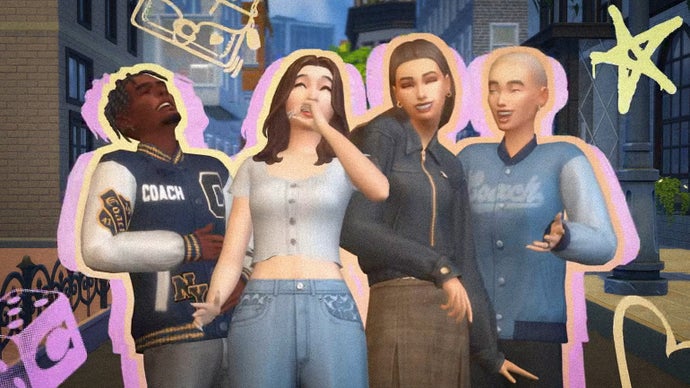
Beyond sports, EA has already tested the waters with a Coach collaboration inside The Sims earlier this year. The partnership introduced branded bags and clothing into the game at no cost to players, and Dao cited the reception as proof that non-sports integration can work when the brand fits the community's taste. The Sims audience, he suggested, responded well precisely because the items were desirable within the game's fashion-forward identity and didn't feel like a cynical cash grab. It's a meaningful data point for EA as it considers where else contextual brand deals could land.
Perhaps the most significant strategic revelation in Dao's comments was his emphasis on building advertising into games from the earliest stages of development. He specifically cited the upcoming free-to-play Skate as an example of a title where brand experiences can be designed in natively, creating more flexibility and a more seamless result than retrofitting ads into a finished product. The implication is clear: EA's advertising ambitions will likely be most visible — and most polished — in its next generation of free-to-play titles, where the commercial model and the design philosophy can grow together from day one.
This isn't a new idea in the industry. APB experimented with in-game voice-chat advertising as far back as 2010, Fortnite has built a billion-dollar crossover business on brand collaborations, and EA itself was publicly discussing advertising as 'a meaningful driver of growth' two years ago. Microsoft explored an ad-supported Xbox Cloud Gaming tier, and Sony has reportedly examined ads in free-to-play titles as well. With AAA development budgets continuing to spiral, the question facing every major publisher is no longer whether advertising has a role in games, but how to integrate it without fracturing player trust.
The bigger picture
EA's careful, spokesperson-friendly framing around this advertising platform deserves some scrutiny. The distinction between 'authentic' sports-game ads and intrusive ones is real, but it's also conveniently elastic. What counts as contextually appropriate will inevitably be tested by the commercial pressures that make this platform attractive in the first place. The Coach-and-Sims example is a genuinely thoughtful one, but it also involved free items — a generous entry point that won't necessarily define how these deals look once the platform matures and revenue targets harden.
The competitive implications are significant. If EA successfully normalizes brand integration in triple-A and free-to-play titles, it creates pressure across the industry to follow suit. Publishers already squeezed by rising development costs and a difficult retail environment will look at EA's advertising revenue and want a piece. That could be benign — more free content, lower prices — or it could accelerate a race to monetize every corner of a player's experience. The Skate example is particularly telling: a free-to-play game designed from the ground up around advertising is a fundamentally different product than a paid game with some pitch-side boards added in.
What readers should watch is how EA handles the first major misstep, because there will be one. Some partnership will feel wrong for the game, or some integration will be too prominent, and the community response will define where EA actually draws its lines versus where it claims to. The policies being outlined now are aspirational; the real test is whether the company holds to them when a lucrative but ill-fitting brand deal lands on the table. Player trust, once broken on something this sensitive, is very hard to rebuild.
We're covering this because in-game advertising sits at the intersection of nearly every major tension in modern gaming: rising costs, monetization pressure, player trust, and the blurring line between product and experience. EA is one of the few publishers big enough to build this kind of platform at scale, which means the choices they make here won't just affect EA games — they'll shape what the rest of the industry thinks is acceptable. We've been watching the slow normalization of brand integration in games for years, and this feels like a genuine inflection point rather than another incremental step. The Sims example caught our attention in particular, because it shows this isn't purely a sports-game conversation anymore. We think it's worth asking now, before the platform fully matures, what players actually want from this arrangement and whether 'free items' is a sustainable goodwill currency. Expect us to revisit this story as Skate and other free-to-play titles begin to show what EA's vision looks like in practice.
As an Amazon Associate, LagPing earns from qualifying purchases. Product links are affiliate links.
You might also like
Silent Hill: Townfall Bets on '90s Tech Nostalgia to Replace the Franchise's Iconic Radio
6d ago

Wuchang's Original Creative Mind Returns to Lead Sequel at Brand-New Studio
Jul 30

Zuckerberg Bets the Company on Personal AI Agents Reaching Billions — But Investors Aren't Buying It
Jul 30

Cursor Bets on India's 27M-Developer Pool With $7 Tier Before SpaceX Deal Closes
Jul 28