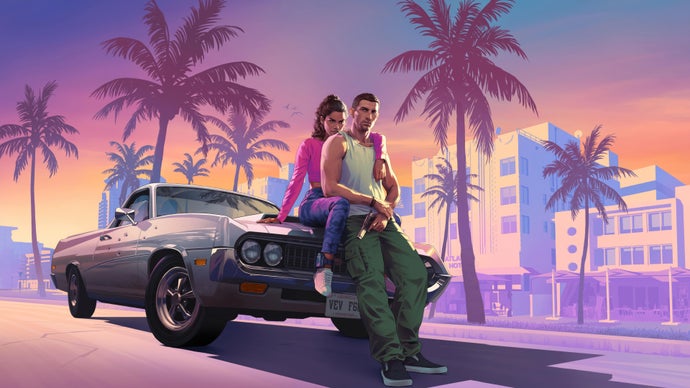
GTA6 Studio's Worker Union Hits Record Membership, Threatening Forced Recognition Battle
Key takeaways
- Rockstar Game Workers Union has reached its highest membership since forming, making statutory recognition legally viable for the first time.
- IWGB president Alex Marshall confirmed negotiations with Rockstar are underway, with a first meeting expected soon and escalation threatened if talks stall.
- If recognized, the RGWU would become the UK's largest video game union by a significant margin, surpassing ZA/UM's recently formed union.
The Rockstar Game Workers Union has announced it now holds more members than at any point since its founding earlier this year, a milestone that carries significant legal weight in the United Kingdom. The union was established in direct response to a wave of controversial layoffs at the Grand Theft Auto 6 developer, and its growing membership has opened the door to statutory recognition — a formal legal process that could compel Rockstar to acknowledge the union whether the studio wishes to or not. According to reporting from People Make Games, the RGWU has initially asked Rockstar to voluntarily recognise it before pursuing that more adversarial route.
Alex Marshall, president of the Independent Workers' Union of Great Britain — the parent organization under which the RGWU operates — confirmed to People Make Games that negotiations with Rockstar Games are actively in progress. A first meeting between the two parties is expected in the near future. Marshall was candid about the IWGB's position, stating the organization is fully prepared to employ alternative legal mechanisms to secure recognition if Rockstar fails to negotiate in good faith. That language suggests the union is not approaching these talks as a formality.
The path to this point has been far from smooth. Marshall acknowledged a 'chilling effect' that dampened organizing momentum in the immediate aftermath of last year's firings, when approximately 30 developers were dismissed by Rockstar under what the company described as gross misconduct. The union struggled to rebuild, but an increasing appetite for worker organization within the studio has since reversed that trend significantly, pushing membership to its current record high.
Rockstar has consistently denied accusations of union-busting, maintaining it had no knowledge of which employees held union membership when it made its dismissal decisions. However, the controversy has refused to die down. Protests were staged outside the London offices of Rockstar's parent company Take-Two Interactive in the months following the layoffs, and the matter was raised directly in the UK Parliament. Former Prime Minister Keir Starmer personally described the firings as 'deeply concerning,' lending the dispute an unusually prominent public profile.
If the RGWU ultimately achieves recognition — voluntarily or through statutory means — it would become the second video game union in the United Kingdom and by a considerable margin the largest. The current title holder is the union formed at Disco Elysium developer ZA/UM, which was established in October of last year. The outcome of this dispute is being watched closely across the UK games industry, where questions about worker protections, layoff practices, and studio accountability have grown increasingly urgent.
The bigger picture
The RGWU's membership surge is not just a win for the workers at Rockstar — it represents a meaningful stress test for how UK labor law interacts with a global games industry that has historically operated with minimal union presence. The statutory recognition pathway is a powerful legal instrument, and the fact that it is now realistically on the table changes the negotiating dynamics considerably. Rockstar and Take-Two cannot simply run out the clock or wait for enthusiasm to fizzle; the union has demonstrated staying power even after a period of organizational setback.
The competitive implications here extend well beyond Rockstar's Edinburgh and London offices. If the RGWU secures recognition — particularly via statutory force — it sends an unmistakable signal to every major studio with a UK presence that organized labor is a permanent part of the landscape they must plan around. Publishers who have relied on the relative weakness of games-industry unions to manage headcount flexibly will need to reconsider their approach to mass layoffs, restructuring, and dismissal procedures. The ZA/UM precedent was easy for larger studios to dismiss as a niche case; a recognized union at one of the world's most commercially powerful game studios is not.
What readers should watch next is how Rockstar and Take-Two behave in those first formal meetings. Marshall's warning about 'different mechanisms' was deliberate — it was a public signal that the IWGB is not bluffing. If Rockstar stonewalls or engages only superficially, the statutory recognition process could move faster than the company anticipates. The broader UK games industry, already navigating a difficult period of layoffs and consolidation, may find this case becomes a defining moment for worker rights in the sector for years to come.
We've been tracking the Rockstar layoff story since it first broke, and what struck us then still strikes us now: the speed at which worker organizing accelerated in response to what many in the industry considered a deeply provocative set of dismissals. This latest development — record union membership and formal negotiations on the horizon — feels like a genuine inflection point rather than another incremental update. We think it matters right now because the UK games industry is in a fragile state, with studios cutting jobs across the board and workers feeling the pressure of an uncertain market. The RGWU's resilience despite that chilling effect Marshall described is genuinely remarkable and worth understanding in full. For our readers who follow the business side of gaming as closely as the release calendars, this story touches on questions that will shape how studios are run for the next decade — who has power, how it gets negotiated, and what happens when workers at some of the biggest names in the medium decide to organize. We'll continue covering this closely.
As an Amazon Associate, LagPing earns from qualifying purchases. Product links are affiliate links.
You might also like

Hollywood's Licensing Gamble: Why Studios Hold More Leverage Than Google Admits
Sep 2
Built Under Fire: How 4A Studios Is Crafting Metro 2039 From Inside a War Zone
Aug 26

Anthropic's Claude Watermarking Sparks Backlash From Workers and Students Hiding AI Use
Aug 13

Indonesia's 1998 Crisis Becomes a PS5 Game Where a Toll Booth Worker Fights to Protect Her Baby
Aug 5