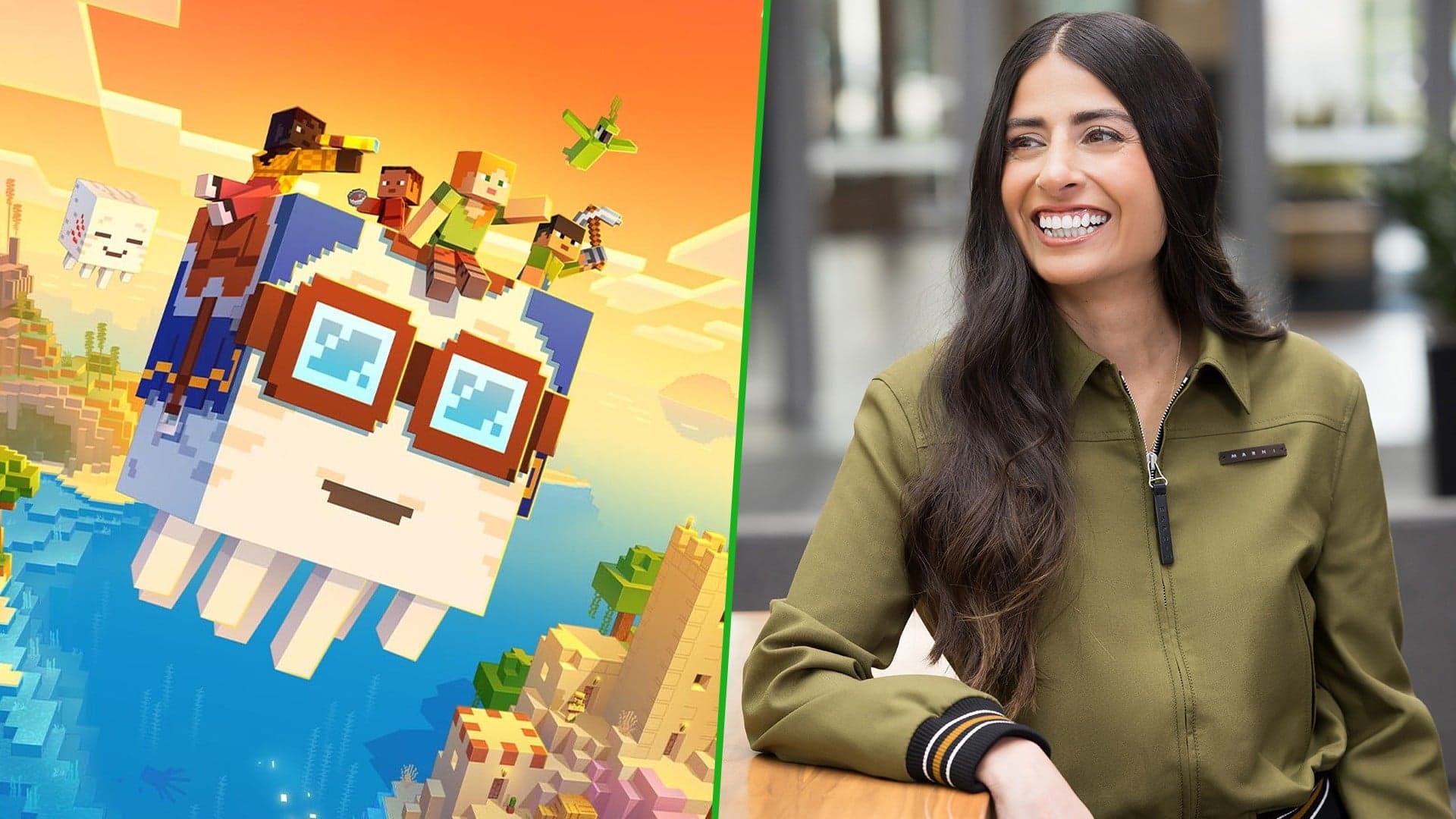
Minecraft and Candy Crush Studios Get Direct Line to Xbox's New CEO Amid Massive Restructure
Key takeaways
- Xbox CEO Asha Sharma announced Mojang and King will report directly to her as part of a major company restructure cutting 3,200 jobs by FY27.
- Both studios are highlighted for having the largest monthly active player counts in the Xbox portfolio, with Minecraft and Candy Crush spanning global audiences across multiple platforms.
- Xbox plans to reduce management layers from as many as 14 down to a maximum of five, signaling a push for faster, leaner decision-making across the organization.
Microsoft's Xbox division is undergoing one of the most dramatic restructurings in its history, and at the center of that shake-up are two studios that most hardcore gamers might not immediately associate with Xbox's identity. CEO Asha Sharma, writing in a lengthy 'resetting XBOX' post on Xbox Wire, revealed that Mojang — creators of Minecraft — and King — the mobile giant behind Candy Crush Saga — will now report directly to her. The announcement comes alongside a plan to eliminate 3,200 Xbox jobs by the end of fiscal year 2027 and divest several other development studios from the portfolio.
Sharma framed the decision around scale and reach, describing both Mojang and King as studios that have evolved into platforms in their own right. 'These two studios have increasingly become platforms and are our largest by monthly active players,' she wrote. 'They bring critical geographic, demographic, and differentiation to XBOX.' That language signals a shift in how Xbox leadership is thinking about success — measured not in console units sold, but in the sheer volume of daily engaged players across every device and region.
The logic behind elevating Mojang is straightforward. Since Microsoft acquired the Swedish studio in 2014 for $2.5 billion, Minecraft has transformed into a cultural juggernaut, spawning spin-off games, merchandise, educational platforms, and most recently a Hollywood film that has performed impressively at the box office. King, acquired as part of Microsoft's $68.7 billion Activision Blizzard deal, brings a mobile-first audience that Xbox has historically struggled to reach, dominating app stores with Candy Crush for well over a decade.
The two studios are also actively collaborating on a new project: Minecraft Blast, currently in co-development and heading to Apple iOS. The partnership underscores the increasingly blurred lines between Mojang's sandbox world-building DNA and King's expertise in accessible, broadly appealing mobile game design. It also hints at the kind of cross-studio synergy that Sharma appears eager to encourage under a flatter, more direct management structure.
Speaking of structure, Sharma's post took direct aim at bureaucratic bloat within the organization. She noted that in some parts of the company, decisions pass through as many as 14 layers of management — a figure she described as incompatible with building great technology. Going forward, Xbox will cap management layers at no more than five, and push for three wherever feasible. Xbox Game Studios currently houses nine studios under its umbrella, though it remains unclear precisely which of those already report to Sharma and which are impacted by the broader restructure.
The bigger picture
The decision to elevate Mojang and King above the rest of the Xbox studio portfolio is a revealing strategic statement. For years, Xbox's identity has been tightly bound to console gaming and franchises like Halo, Gears of War, and Forza. But those properties, despite their cultural prestige, pale in comparison to Minecraft and Candy Crush when it comes to raw monthly active users. Sharma's move signals that Xbox is consciously pivoting its self-definition away from the living room and toward a broader, platform-agnostic entertainment model. The billion-player goal she cited isn't achievable through console exclusives — it requires properties that live on phones, tablets, and browsers just as comfortably as on Xbox hardware.
The competitive implications here are significant. By flattening management and centering decision-making around its most-played studios, Microsoft is essentially betting that speed and focus will matter more than breadth. Rivals like Sony remain deeply committed to prestige single-player console experiences, while Nintendo thrives on IP loyalty. Xbox is carving out a different lane entirely — one defined by accessibility, scale, and cross-platform ubiquity. Whether that strategy pays off depends heavily on execution, and on whether Mojang and King can sustain their remarkable engagement numbers while also expanding into new territory like Minecraft Blast.
The risk worth watching is cultural. Mojang and King serve very different audiences with very different expectations, and centralizing them under one executive's direct oversight could either sharpen strategic alignment or introduce friction neither studio has faced before. Investors and industry observers should also monitor how the remaining Xbox Game Studios fare under the slimmed-down structure — and whether the studios not singled out by Sharma begin to feel the weight of being deprioritized in a leaner, more focused organization.
We're covering this story because it marks a genuinely consequential moment for the games industry — not just for Xbox fans, but for anyone watching how the biggest players in tech are rethinking what a 'gaming company' actually means in 2025. When a Fortune 500 CEO reshuffles her org chart to put Minecraft and Candy Crush at the top of the hierarchy, that's a signal worth unpacking carefully. At LagPing, we've been tracking the slow but steady shift of Xbox's identity away from pure console competition, and this restructure feels like the clearest statement yet of where that journey is heading. The human cost of 3,200 job losses shouldn't be lost in the strategic analysis either — these are real developers, designers, and support staff whose livelihoods are caught up in a corporate reset. We think it's important to hold both truths at once: the business logic is coherent, and the toll is real. We'll be keeping a close eye on how Mojang and King perform under this new arrangement, and what it means for the studios that didn't make Sharma's shortlist.
As an Amazon Associate, LagPing earns from qualifying purchases. Product links are affiliate links.
You might also like
After 17 Years of Fan Requests, Mojang Adds Seating to Minecraft's Next Big Update
IGN

Microsoft's Xbox Purge: 3,200 Jobs Gone and Five Iconic Studios Cut Loose
Rock Paper Shotgun
3,200 Jobs Gone: Obsidian, Bethesda, and Activision Studios Gutted in Microsoft's Massive Cuts
Pure Xbox

Midjourney's Legal Gambit: Force Studios to Expose Their Own AI Practices in Court
TechCrunch AI