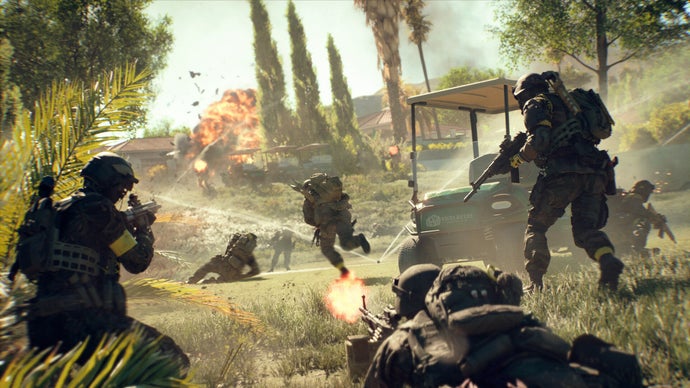
Saudi Arabia, Silver Lake, and Kushner's Affinity Complete $55B EA Buyout, Taking Publisher Private
Key takeaways
- Saudi Arabia's PIF, Silver Lake, and Affinity Partners finalized the $55 billion EA acquisition on August 4, 2026.
- EA is now a private company, no longer subject to public shareholder oversight.
- Workers and LGBTQIA+ communities have raised concerns about potential layoffs and content changes.
Electronic Arts is no longer a publicly traded company. Saudi Arabia's Public Investment Fund, private equity firm Silver Lake, and Jared Kushner's Affinity Partners completed their $55 billion acquisition of EA on August 4, 2026, following a filing with the US Securities and Exchange Commission and a green light from the European Commission, which declined to block the deal. EA's portfolio — which includes EA Sports FC, Battlefield, The Sims, Mass Effect, and Dragon Age — now sits under the control of three investment groups rather than public shareholders.
The acquisition was first announced last year, and Kushner, who is the son-in-law of sitting US President Donald Trump, addressed the deal in a press release. He stated that EA has 'created stories, characters, and communities that have become part of everyday life for hundreds of millions of people,' and expressed enthusiasm about supporting the company in reaching new audiences and expanding how people connect through play. Kushner's political ties have added an additional dimension of scrutiny to the transaction.
The transition to private ownership has drawn concern from organized labor. The United Videogame Workers CWA warned at the time of the announcement that any resulting job losses or studio closures would be 'a choice, not a necessity, made to pad investors' pockets.' The union also flagged particular worry about studios that might be labeled less profitable despite their outsized contributions to EA's cultural reputation.
LGBTQIA+ communities that have long found representation in EA's catalog have also voiced unease. The Sims, Mass Effect, and Dragon Age are each widely celebrated within queer gaming spaces, and players have been watching closely for any signals about how new ownership might influence creative direction. At the Develop conference last month, a developer working on The Sims addressed the concern directly, saying they had not heard any diversity-related mandates coming down and pledged they would 'fight it tooth and nail' if such directives ever materialized.
The deal marks one of the largest gaming industry acquisitions in recent memory, fundamentally reshaping who holds power over some of the most culturally significant game franchises in the world. With EA no longer answering to public shareholders, the direction of its studios now rests entirely with its new private backers — a shift whose full consequences for employees, players, and the broader industry will take months, if not years, to fully understand.
The bigger picture
The privatization of EA is a watershed moment for the games industry, and not simply because of the dollar figure attached. When a publisher of EA's scale — one responsible for franchises touching hundreds of millions of players — moves out of public accountability structures and into the hands of sovereign wealth and private equity, the creative and labor implications are profound. Saudi Arabia's Public Investment Fund has been aggressively expanding its gaming footprint for several years now, with stakes across multiple major publishers and platforms. This acquisition accelerates a consolidation trend that competitors like Take-Two, Ubisoft, and even Microsoft will be watching carefully.
Kushner's involvement through Affinity Partners injects a political dimension that is hard to ignore. His proximity to the Trump administration means that any future decisions affecting EA's workforce, content, or international distribution could draw heightened regulatory and public attention — particularly in markets like the EU, which is increasingly assertive about foreign investment in culturally significant media companies. Regulators who passed on blocking the deal now may find themselves revisiting their frameworks if outcomes for workers or creative output prove harmful.
For players, the most immediate concern is whether private ownership accelerates cost-cutting or homogenizes content across EA's diverse portfolio. Labor unions have flagged that studios deemed 'less profitable' are vulnerable, and historically private equity involvement in creative industries has not been kind to smaller, culturally resonant projects. Readers should watch for announcements around studio structures and headcount in the months ahead, as well as any early signals about how new leadership engages — or doesn't — with the developers who built these communities.
We're covering this one closely because it sits at the intersection of nearly every conversation we've been tracking at LagPing: the financialization of gaming, the safety of developer jobs, and the question of whether beloved franchises can survive ownership transitions with their identity intact. EA is not some minor studio — we're talking about franchises that have shaped how millions of people game, socialize, and, for many LGBTQIA+ players, see themselves reflected in a virtual world. The involvement of both a sovereign wealth fund and a figure as politically prominent as Jared Kushner means this acquisition will keep generating news long after the contracts are signed. We want to make sure our readers have the full picture, not just the press-release version. We'll be watching EA's studio communications, union statements, and any early product decisions that hint at where this new ownership is steering things.
As an Amazon Associate, LagPing earns from qualifying purchases. Product links are affiliate links.
You might also like
EU Clears Saudi PIF's $55B Electronic Arts Takeover — But US Scrutiny Remains
Jul 24
GDQ Drops SNK Sponsorship Mid-Stream After Backlash Over Saudi Arabia's Human Rights Record
Jul 14

2007 FromSoftware Prototype Reveals Demon's Souls Once Let Players Switch to First-Person View
17h ago

Arc System Works Acknowledges Marvel Tokon PC Problems as PSN Demands and Anti-Cheat Lock Out Players
17h ago