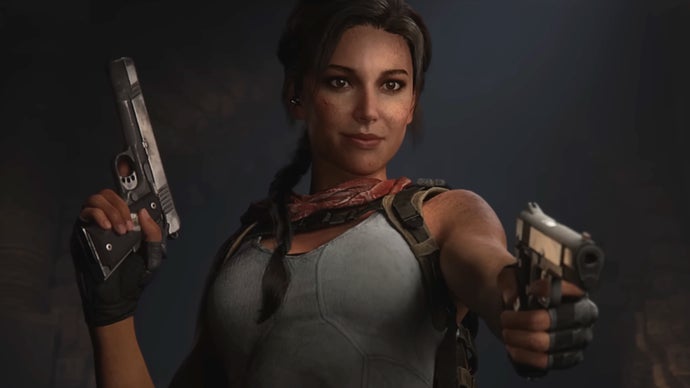
Amazon's Tomb Raider Slate Slips Further: Catalyst Pushed to 2028 Amid Growing Franchise Chaos
Key takeaways
- Tomb Raider: Catalyst has been delayed from 2027 to 2028, confirmed casually by Amazon's head of gaming Jeffrey Gattis.
- Crystal Dynamics has endured four rounds of layoffs in under a year, raising concerns about studio stability during a critical development period.
- The broader Tomb Raider revival is beset by issues including AI development controversy, a delayed remake, and a paused live-action TV production.
Amazon's ambitious plan to resurrect the Tomb Raider franchise is running into serious turbulence. Amazon head of gaming Jeffrey Gattis let slip during a conversation with The Game Business that Tomb Raider: Catalyst — a brand-new entry in the series set in India — will now arrive in 2028, a full year later than previously anticipated. The casual manner of the announcement, dropped almost as an aside during a broader discussion of Amazon's gaming portfolio, did little to inspire confidence in the project's momentum.
The delay to Catalyst compounds an already difficult situation for the franchise's comeback. The other game in the pipeline, Tomb Raider: Legacy of Atlantis — a ground-up remake of the original 1996 classic — was itself pushed from a 2026 release to February 12, 2027, just weeks ago. Amazon and Crystal Dynamics had only formally announced both titles last December, meaning the projects have barely been public knowledge for a year before hitting their first significant roadblocks.
Amazon's partnership with Crystal Dynamics dates back to 2022, though the exact shape of the collaboration took years to fully materialize. Catalyst promises to take Lara Croft on a fresh archaeological expedition across India, targeting PS5, Xbox Series X/S, and PC. The game was widely expected to build momentum following Legacy of Atlantis rather than compete with it, but the extended gap between both releases now raises questions about long-term franchise coherence and audience engagement.
Beyond scheduling woes, the franchise has faced additional controversies. Legacy of Atlantis drew criticism in June when it was confirmed that AI tools were being used in its development — a claim Crystal Dynamics framed as a means of accelerating decision-making. Amazon's PR team notably shut down further questioning on the matter, fueling speculation rather than calming it. Meanwhile, production on Amazon Prime's live-action Tomb Raider series stalled after lead actress Sophie Turner sustained a back injury on set, though filming has since resumed.
Crystal Dynamics itself has not been spared hardship during this period. The developer confirmed a fresh round of layoffs in June affecting 20 employees, representing its fourth set of cuts in under a year. For a studio tasked with reviving one of gaming's most beloved icons, the internal instability is a worrying backdrop against which to deliver two high-profile releases.
The bigger picture
Amazon entered the games space with serious financial muscle and genuine ambition, but the Tomb Raider revival is beginning to look like a case study in how not to manage a beloved IP. Two delayed games, a paused TV production, AI controversy, and serial layoffs at the development studio — any one of these would be a story on its own, but together they paint a picture of a franchise rollout without a stable center of gravity. The question now isn't just whether Catalyst will be good, but whether audience enthusiasm can survive a four-year wait from announcement to release.
From a competitive standpoint, 2028 is a long runway, and the games industry will look meaningfully different by then. Microsoft, Sony, and a host of independent studios will have released their own major action-adventure titles, reshaping player expectations. Crystal Dynamics already faced perception issues following the lukewarm critical reception to recent Tomb Raider entries, and a 2028 release means Catalyst will need to be genuinely exceptional to cut through a crowded market rather than merely competent.
The AI development controversy is perhaps the most strategically dangerous element here. Gamers are increasingly attentive — and hostile — to AI usage in creative pipelines, and Amazon's PR shutdown of follow-up questions only amplified suspicions. If Legacy of Atlantis launches in February 2027 to mixed reviews or visible signs of AI-generated content, it could poison the well for Catalyst before that game ever ships. Readers should watch how Amazon handles the marketing of Legacy of Atlantis closely — its reception will effectively set the stakes for everything that follows.
We're covering this story because, honestly, the Tomb Raider franchise deserves better — and so do the people waiting for it. When Amazon announced its partnership with Crystal Dynamics back in 2022, there was genuine excitement about what a well-resourced revival could look like for Lara Croft. Four years on, we have two delayed games, a studio that has endured four rounds of layoffs in less than a year, an AI controversy that was literally shut down mid-interview, and a TV show that stopped filming due to a cast injury. Each individual piece might be forgivable in isolation, but the accumulation of it all demands scrutiny. We also think it's worth noting just how casually this delay was announced — dropped into a broader strategy conversation rather than communicated directly to fans who have been following these projects closely. That kind of offhand disclosure says something about how Amazon views this audience, and we think that deserves to be named.
As an Amazon Associate, LagPing earns from qualifying purchases. Product links are affiliate links.
You might also like

Arc Raiders Expeditions Frozen Until 2027 as Embark Admits Core Systems Need a Rethink
Aug 22
How Splatoon Raiders Ditched Trap Forts for Non-Stop Combat Chaos
Jul 23

Undead Labs Cuts Staff After Xbox Split, Promises State of Decay 3 Stays on Track
22h ago

Marvel's Wolverine Director: Height Matters When Building Emotional Depth
22h ago